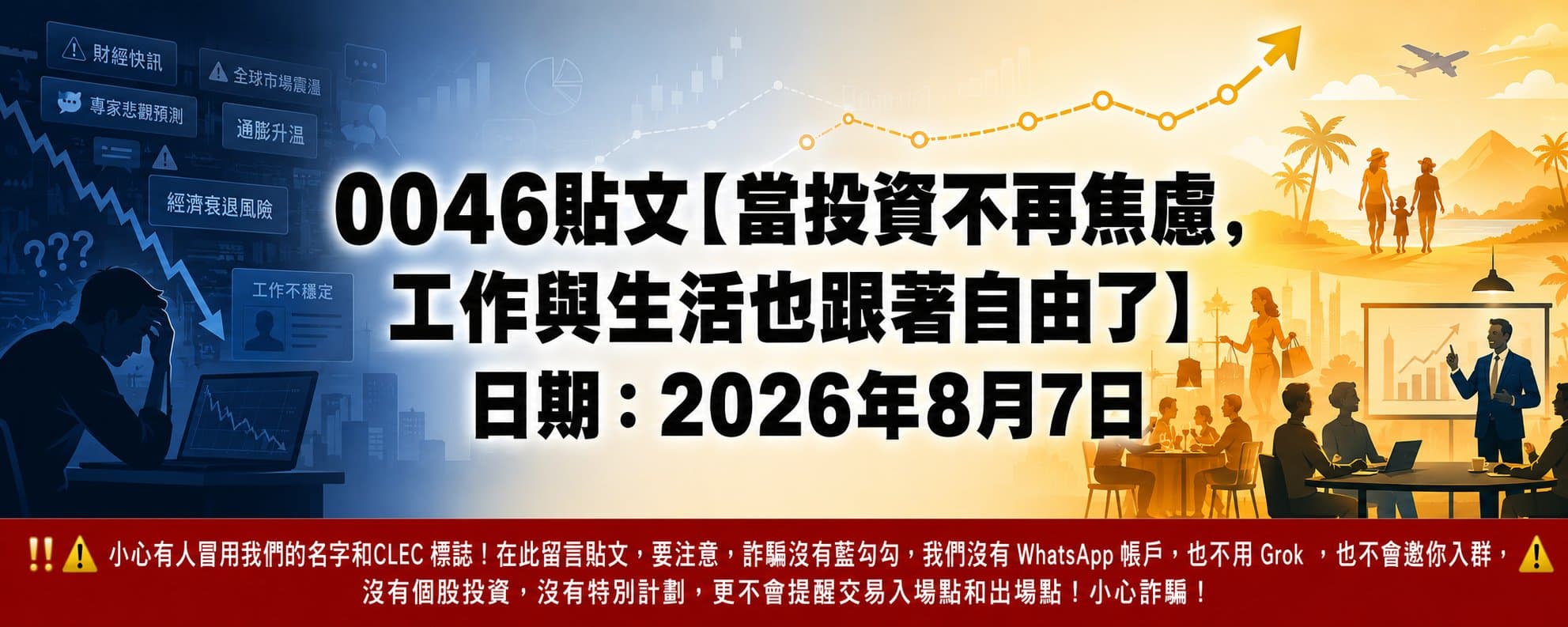
When Investing No Longer Causes Anxiety, Work and Life Become Freer Too
A student in mainland China explains how a simple long-term investing approach eased the family’s anxiety, made spending and work feel freer, and changed their outlook on life.
Teacher James, hello:
It feels as though we are meeting through this letter.
As I write, it is a summer afternoon. Although the heat outside is hard to bear, my mood at this moment is exceptionally bright and relaxed.
First, I truly want to thank you for taking time out of your busy schedule to read a letter from an ordinary student in mainland China.
I am one of your students in mainland China and began watching your program around this time last year. Your investment philosophy was like a ray of light entering a life that had been somewhat lost.
You often say, “Choose the Nasdaq, buy whenever you have money, and never sell even if it kills you.” Those few simple sentences are easy to say, but truly following them requires tremendous resolve.
In the past, I watched all kinds of financial news every day with my nerves stretched tight. At the slightest international disturbance, I could not stop wondering whether I should adjust my position. I did not even sleep soundly at night, always afraid of missing some important news. I exhausted myself, yet instead of making money I lost money and was constantly swept along by anxiety.
Only after learning this method from you did I truly understand what it means for the great way to be simple. It confirms the old Chinese saying: “More brings confusion; less brings gain.”
When I stopped being disturbed by complicated information and focused my energy on this one correct thing, the sense of certainty within me was unlike anything I had felt before.
My main reason for writing today is to share that, because of this certainty, our entire family’s life has changed greatly.
My spouse and I work in mainland China, and we have a lovely child. To be honest, although our income used to be fairly good, we never felt secure. Uncertainty about the future sat on our hearts like a stone.
We did not dare spend money and tried desperately to save, always thinking we had to prepare in advance for retirement, our child, and every possible risk. It felt like walking a tightrope: even while working hard to keep our balance, we remained constantly anxious.
Your investment system gave us the confidence to face the future. Once we became certain that the long-term direction of our family wealth would not change as long as we kept doing the right thing, the stone that had weighed on us finally fell away.
This change has reached every part of our lives.
In daily life, we no longer make ourselves suffer merely to save money. We often take the family out to eat and travel; when buying things, we care more about quality and experience instead of looking only at the price tag.
We know that happiness in the present and the smiles of our family are themselves part of wealth.
The change at work has surprised even me.
I used to be afraid of losing my job. In meetings I was timid, did not dare express my real views, and was always thinking about how to please others.
Now I am no longer so worried about gains and losses. I actively offer suggestions in meetings, and even when my views differ from others, I can communicate calmly.
My workload has not decreased, but my mood has become incomparably lighter.
You often say that you hope we can retire early. But now I feel it does not matter even if I do not retire, because I am happy every day and work itself has become something that gives me a strong sense of accomplishment.
I originally listened to your program mainly to learn investment ideas. Now I enjoy your lessons about life even more.
Chinese history has many sages whose wisdom inspires respect, but they always seem far removed from our lives. My spouse often says that Teacher James is a great sage of our time.
You have taught us not only how to manage wealth, but also how to manage our own lives.
A thousand words ultimately become one simple blessing:
May you and your family enjoy good health, peace, and happiness!
One of your students
More Posts
Taiwan Investors: Buy Taiwan 0050
[Taiwan investors buy Taiwan 0050] CLEC Club Date of writing: July 27, 2019 For investors in Taiwan, it is recommended that the first choice is to open a fund account in a bank and buy the American high-tech fund "Frankl

[The most important thing about investing is: buy but don’t operate! 】
Date of writing: August 09, 2018 That’s right! The most difficult thing about investing is that when you first buy, the market is volatile and investors are nervous! Because investors are not used to market fluctuations, and because many analysts and news in the market are talking about how scary the market is! It scared everyone to buy and sell! Sell and buy again, buy at the high point and kill at the low point. The market will always be volatile, so investors must be able to accept shocks and ignore them. Just remember that the market is very good for investors in the long run.
![Chapter 48 [What Is the Difference Between Buying Index Funds Whenever You Have Money, Holding Long Term, Never Selling, and Buffett's Value Investing? Written on June 11, 2022]](/_next/image?url=%2Fimages%2Fblog%2Fjames-history-and-today%2Fen%2Fjames-history-and-today-0054-cover.png&w=3840&q=75 "Chapter 48 [What Is the Difference Between Buying Index Funds Whenever You Have Money, Holding Long Term, Never Selling, and Buffett's Value Investing? Written on June 11, 2022]")
Chapter 48 [What Is the Difference Between Buying Index Funds Whenever You Have Money, Holding Long Term, Never Selling, and Buffett's Value Investing? Written on June 11, 2022]
We have always said we are believers in Buffett's value investing, but our method is not investing in individual stocks, and we do not evaluate value. We simply buy whenever we have money. How can this be the same as Buffett's value investing? Buffett's value investing means buying when the stock price is far below value and considering selling when the stock price is far above value.
Newsletter
Join the community
Subscribe to our newsletter for the latest news and updates