
Wealth Doesn't Come from Hardship: Be a Diner at the Table, Not an Ingredient in the Oven!
CLEC James Chat EP38: Asset allocation beyond 50x and 100x annual expenses, risk management during market drops, starting a family early, raising children, and the real cost of retiring in the U.S.
Welcome to CLEC James Chat—I'm James.
Today should be Episode 38.
There's a friend whose assets have already reached 50 times his annual expenses.
He asked: if my assets later grow to, well, 100 times my annual expenses, how should my asset allocation look?
And if my assets reach 200 times my annual expenses, how should my asset allocation look then?
You spend from your cash portion each year and rebalance annually, and because the market rises over time, you may eventually reach 100 times your annual expenses—growing from 50x to 100x.
At that point, should your asset allocation still be 70/30, or 80/20? You don't need 70/30 across the whole portfolio—think about it: you simply apply 70/30 or 80/20 to the portion equal to 50 times your annual expenses.
As for the other 50x portion, you can put all of it into a Nasdaq-100 index fund. It's as simple as that.
Because the portion you actually need for living is that 50x base.
Five years from now, your assets might double and your standard of living might rise too. So suppose today you spend RMB 200,000 a year, or TWD 2 million—then 50x would be RMB 10 million.
With that initial RMB 10 million, you start with an 80/20 or 70/30 allocation. By the time your assets reach 100 times your annual expenses, suppose your annual living expenses have grown from RMB 200,000 to RMB 250,000.
Then you first set aside 50 times your annual expenses—around RMB 12.5 million—to cover that RMB 250,000 a year, and allocate that RMB 12.5 million at 80/20 or 70/30.
Everything above that can go 100% into a Nasdaq-100 index fund; you don't need your entire portfolio in 80/20 or 70/30, because otherwise you'd be holding far too much cash, which isn't efficient.
That's what this friend was wondering: if his assets really reach 200 or 300 times his annual expenses, does he really have to hold that much cash? No, he doesn't.
Holding roughly 10 years' worth of annual expenses in cash should be plenty.
Perspective on Market Declines and Risk Management
Next, a market downturn is really a gift from heaven for us. Someone asked, "Teacher, do I need to wait until year-end to rebalance, or can I buy a little right now?" Of course you can buy a little, as long as it won't disturb your mood if the market keeps falling. You must always, always think ahead: if you buy in and the market falls 80% from its peak—of course, right now the market may have already dropped 10%, 12%, or 15%—what happens then?
If the market drops 80% from its peak, will your asset allocation and your livelihood run into trouble? Will your loans run into trouble? That is what you need to think about first—not rushing to buy the dip or catch the bottom. Trying to call the bottom isn't the most important thing.
For example, yesterday I replied to an email where someone asked, "Teacher, can I buy during this dip right now?" I said of course you can—I buy too—using cash, except in my case it's only 1% of my total assets.
One percent of total assets—what does 1% of total assets mean? It means cash equal to 1% of your total assets. If you have 10 million, what is 1% of your total assets? 100,000.
Divide that 100,000 into five tranches—20,000 per tranche—and once you've deployed that 100,000, you stop.
Deploying just 1% like that should obviously be harmless.
Even when putting in that 1%, you still have to ask yourself: if the market keeps falling and drops 80% from the peak, will your securities-backed loans be in trouble? Will your 2x leverage be in trouble? Will your psychological tolerance hold up? All of these are part of risk management—it's not just about saying, "Oh, the math looks fine on paper."
Yet many people are already starting to get nervous during the current drop. There's a friend from mainland China, probably investing in A-shares, who lost so much he said he was about to lose his mind—in just a few days he lost a full year's living expenses. He said he deeply regretted investing in A-shares and wished he could have bought the Nasdaq instead.
In truth, this has nothing to do with whether you invest in A-shares or the Nasdaq; it comes down to your psychological resilience as an investor and not truly understanding what you're investing in.
Even when you invest in a broad-based index fund like a Nasdaq-100 index fund, it can still drop 80% too, right?
An 80% drop is far bigger than what A-shares are falling right now. If you ran into an 80% drop in a Nasdaq-100 index fund, would you really not panic? Not necessarily.
So the first thing is to see clearly that the market rises over the long term while it can fall very steeply in the short term. Every investor must genuinely believe and understand this, and avoid succumbing to fear and anxiety during severe downturns.
That's why our channel keeps talking about risk management, risk management, over and over.
Risk management isn't just what works out on a spreadsheet; it's also about how much you can personally stomach. So invest as conservatively as needed to let yourself sleep peacefully at night.
If you chase a 15% return and make your asset allocation too aggressive, one day you're going to lose sleep over it.
You're far better off setting up an asset allocation that gives you a 7% return, because our withdrawal rates don't even reach 7%—they're around 2%, 3%, or 4%.
That way you can sleep soundly with an annualized return of 7%, keep volatility smooth so your portfolio doesn't swing wildly, and whether you're using securities-backed loans or spending from cash, you can ride out market turbulence calmly.
That's essentially ignoring market volatility altogether—because you're submerged deep beneath the ocean rather than bobbing among the waves on the surface, so the surface waves can't hit you.
So this is something everyone needs to appreciate: it's much better to spend your money steadily and peacefully than to take on excessive risk in pursuit of high growth.
Don't just ask whether the numbers hold up mathematically—you also have to consider whether your mind can handle it. That's the key.
Young People's Careers, Marriage, and the Capitalist Mindset
Today I also received an email from a friend in his thirties. He said that right after he graduated from college, his uncle told him that young people should endure hardship, shouldn't marry too early, and should grind hard to build a career.
He actually took his uncle's advice—worked himself to the bone until the middle of the night every single day—and still got laid off by his company.
Now he's in his thirties and still unmarried. A supervisor at his new workplace asked him, "Why haven't you gotten married yet?" He replied that his uncle told him to focus on his career and not marry too early. His supervisor told him, "Your uncle was wrong—you should find a partner and get married first."
That second supervisor is right. We should never sacrifice our families for a job, and we should never sacrifice our health for a job.
Just yesterday I said that a company is an inorganic entity. Using your finite, organic life to go down with an inorganic entity is simply not worth it. So the first priority for young people is to get married early and start a family.
As long as you invest, money will come. Of course, elders don't say these things to hurt you, and from their own standpoint and past life experience, they weren't wrong to speak the way they did.
But times have changed, and you now understand the true nature of capitalism: wealth does not come from suffering and hardship.
To be wealthy, you have to invest—you want to be the diner sitting at the table enjoying a fine meal, not an ingredient thrown into the oven to be roasted. You have to keep that distinction crystal clear.
On Having Children and Shifting Mindsets
Next, there's a friend who is preparing to have a second child. Because the first child was a girl and the second is also a girl, he felt a bit disappointed—he believed you need a boy to carry on the family line and to take care of you in old age.
Not many young people today still hold that kind of view.
Boys or girls, they are all wonderful. Having all girls or all boys is equally wonderful. Ideas like whether sons or daughters are more filial, or relying on sons to support you in old age because daughters marry out and are no longer part of the family—all of those notions are completely outdated.
We raise children to experience life, not as an insurance policy for old age. That way of thinking is already obsolete.
We should build enough wealth to support our children, rather than turning our own retirement into a burden on them.
Parents and their wealth should be their children's safety net. If your child can't work or loses a job, you can pat your chest and tell them, "Don't worry—there's always a bed and food waiting for you at home." That is what parents should aim to be, instead of blindly expecting children to support them in old age.
We're going to have plenty of money and won't need to rely on our kids, so having boys or girls is equally great.
If you already have two girls and still want a boy so you can experience raising a child of the other gender, then just have another one—keep going until you have a boy.
Don't be afraid—we have plenty of money.
Practical Realities of Immigrating to the United States
Next, there's a friend who has the opportunity to immigrate to the United States and get a green card—as you may know, local staff who work at U.S. embassies around the world are sometimes offered a green card when they retire.
By that time you're already in your fifties or sixties; you get a green card and can gradually bring your whole family over. Yet is moving to the United States really the best choice?
Let me tell you, the cost of living in the U.S. right now is shockingly high.
A single pork rib bento box costs $20—that's TWD 600.
A McDonald's combo meal also costs nearly $20.
Even if you go for a cheaper meal out, it's still $15.
That's TWD 400 to 500, so your cost of living is basically around five times what it is in Taiwan—because salaries here are higher too.
So if you can retire in Taiwan with TWD 20 million, coming to the U.S. means you might need TWD 100 million to retire.
That's why I say if you don't have $3 million, you're better off not coming to the U.S., because you'll only be coming here to struggle. Even with $3 million, withdrawing 3% only gives you $90,000 a year. Rent alone takes out $40,000, leaving $50,000—less than $5,000 a month. How could you live comfortably on that? You might end up having to go back to work. In your own home country you could have retired at 60 with TWD 20 million or $1 million, yet by moving to the U.S. you have to keep working—and that doesn't even include your health insurance.
When you turn 65, because you never paid into U.S. Social Security, you don't automatically have coverage—none of that comes for free.
Sure, you could say you'll apply for U.S. low-income health insurance. True, though low-income coverage tends to be an HMO, meaning you can't see just any doctor you want—though of course it's adequate, it gets the job done.
In short, to enjoy the same quality of life as back home, you need three to five times the assets you'd need in your home country. In Taiwan, with $1 million—TWD 30 million—you can live quite well, spending TWD 1 million a year.
In the U.S., you'd need $3 million and might still live less comfortably than in Taiwan. So moving to the U.S. isn't right for everyone. Now, if you have $10 million—oh, then I'd say sure, come on over, since you can just pay out of pocket for whatever comes up. Okay, so that gives everyone a clear perspective: moving to the U.S. isn't just about whether you can get a green card, it's about knowing whether you have the financial means to support living in America.
This friend is very sensible: even though he could get a green card for free, he decided he'd rather stay in his home country, and I agree that's the right call.
Closing
Those are just a few odds and ends to share with you today—nothing earth-shattering, just investing mindset, risk management, raising children, and young people getting married early. That's all.
Alright, that wraps up today's CLEC James Chat. If other key topics come up, we'll talk again.
Thank you all, see you tomorrow—oh, wait, not tomorrow, see you Monday.
Tomorrow is Saturday, and our Clubhouse room will reopen in the morning—Clubhouse goes live again tomorrow morning on Saturday. Okay, bye-bye!
Listen on Apple Podcast: https://podcasts.apple.com/us/podcast/clec-james-%E6%BC%AB%E8%AB%87/id6798136771?l=zh-Hant-TW&i=1000801760370
Listen on Spotify: https://open.spotify.com/episode/7lI2Zg7OCz4ZDUhkla0zK3?si=Xdld1tegRkmv0oNwuGdoWA
More Posts
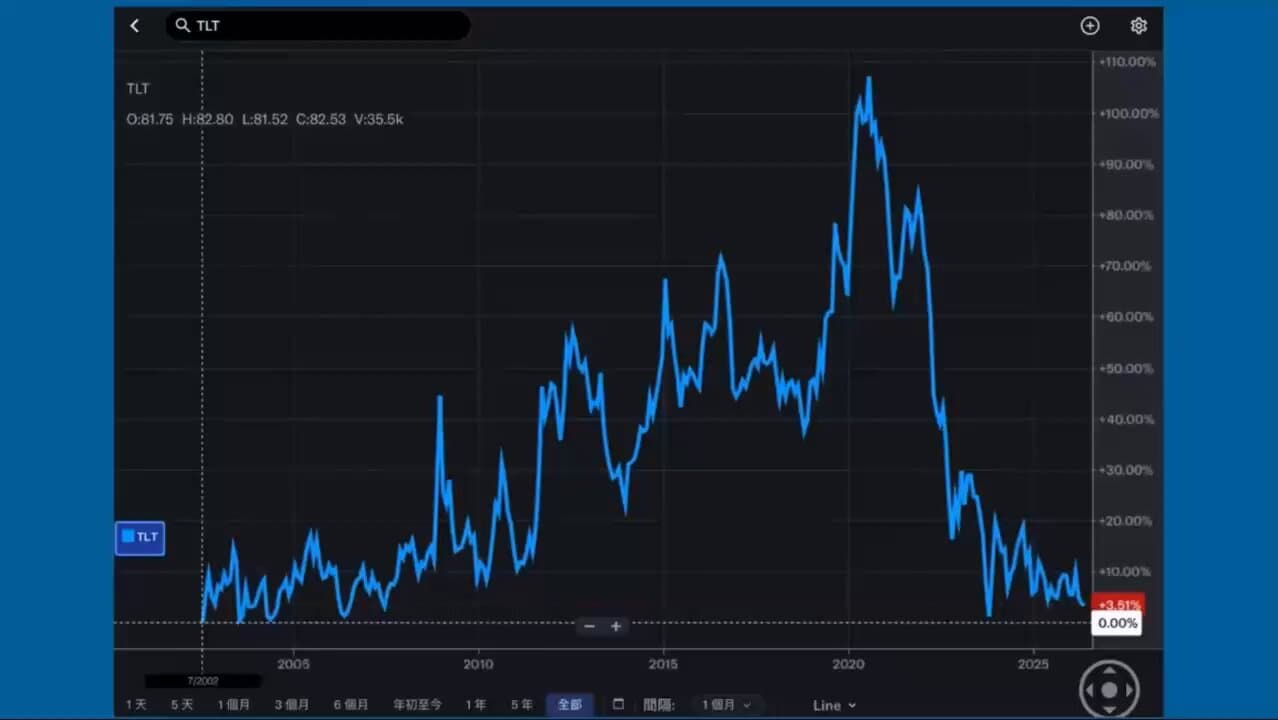
Touch Long-Term Bonds and Your Wealth Gets Blown to Pieces!
TLT has returned only about 4% a year over nearly twenty years, and anyone who bought the 2020 peak has watched it slide from 164 to 85. Avoid long-term, corporate, junk and structured bonds; the only ones to hold are short-term funds such as BOXX, SGOV, BIL and Taiwan's 00865B.

YouTube 02/12/2020 Question Answer
[Youtube 02/12/2020 Question Answer] CLEC Investment and Financial Management Education Channel Blog Post Date: February 15, 2020 Hello teacher, thank you for sharing the video to let us know that the technology industry
Chapter 1【Origin】
I am an engineer. I studied EE electronic engineering in school and entered the product design and development department of Acer. I remember that I had just retired from the army. It was September when the last pre-qualification officer of the year was discharged. Many companies had already filled up their new hires in July and August. My principle when looking for a job was that I wanted to be an R&D person, and my job was in Taipei. I got what I wanted at that time. Acer has a design department in Taipei. After examinations and interviews, I finally got on the last train of the year and entered Acer. This is also my happy project.
Newsletter
Join the community
Subscribe to our newsletter for the latest news and updates