Video Overview
The video begins by urging viewers to question market information rather than accept it at face value, then shifts to the difference between long-term growth and short-term volatility in the U.S. stock market. The speaker uses historical market charts and changes in dividends to explain his long-term perspective, linking dividends with company earnings and value while presenting these connections as his analysis. The latter half introduces SPY, VTI, QQQ, DIA, and a global index product. Their holdings, trading volume, and costs provide a framework for comparing index-based products. The closing discussion compares several asset types and uses an analogy about repeatedly switching purchases to argue for understanding what is held, focusing on value, and avoiding constant trading based only on price.
Key Takeaways
- The speaker uses historical charts to distinguish long-term growth from annual volatility and encourages skepticism toward market information and short-term forecasts.
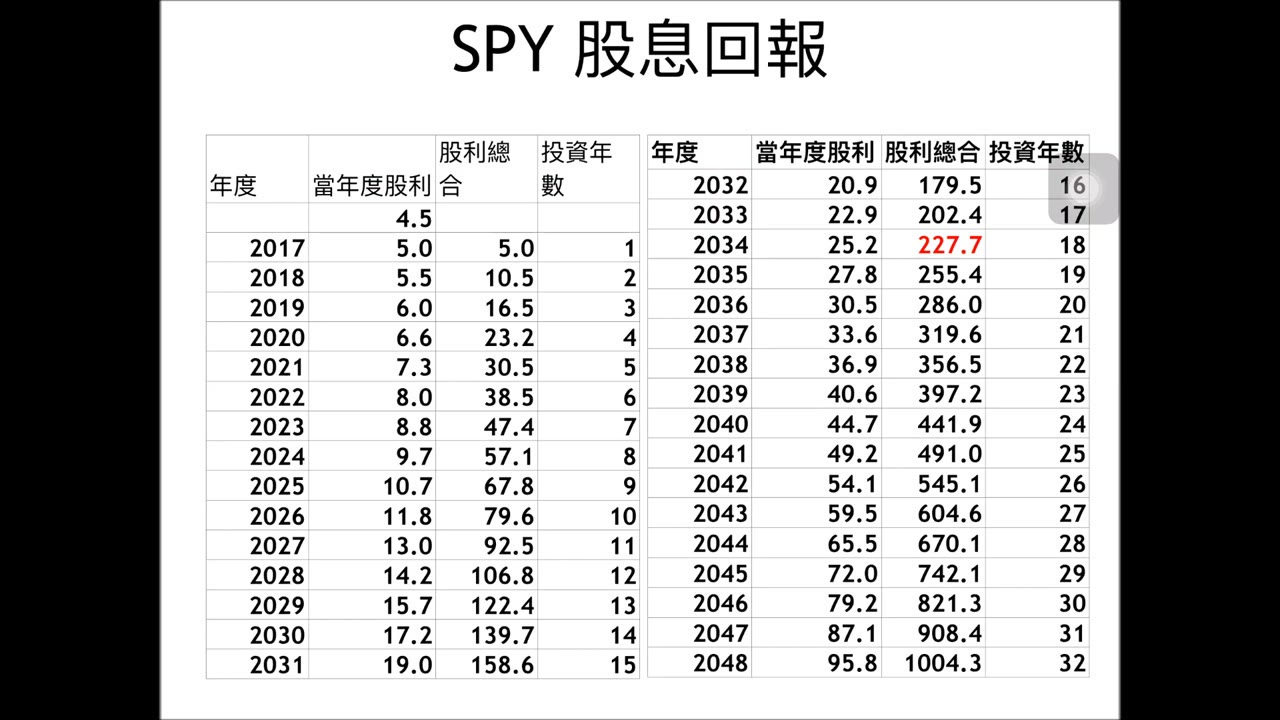
- The video connects dividend growth, company earnings, and share prices as part of the speaker's framework for explaining long-term market movements.
- SPY, VTI, QQQ, and DIA illustrate differences in index-product coverage, holdings, costs, and trading volume.
- Through cross-asset comparisons and an example of repeatedly switching holdings, the speaker emphasizes value, diversification, and a long holding horizon.
Chapters
About 00:01:58 · Long-Term Growth and Short-Term Volatility
The speaker discusses long-term U.S. stock-market growth through historical charts and cautions against treating short-term movements or market commentary as certain predictions.
About 00:04:22 · Dividend Growth and Company Value
Changes in dividends are linked with earnings and company value to explain the speaker's view of what may drive long-term market growth.
About 00:05:27 · Value and Costs of Index Products
The speaker introduces SPY and VTI and compares similar index products through value, expenses, trading volume, and market-impact costs.
About 00:06:32 · Holdings and Diversification
QQQ, a broader index, and DIA are used to show how different baskets of holdings can provide different degrees of diversification.
About 00:08:47 · Global Products and Long-Term Holding
The speaker responds to a question about a global index product and uses frequent switching between holdings to contrast long-term value with price chasing.
Related Topics
U.S. stock market, long-term investing concepts, dividend growth, company value, index funds, asset comparison, diversification, trading costs
This page was prepared with AI from selected portions of the video's audio to help readers understand the main topics. It may omit secondary material or contain transcription errors; the original video remains authoritative.