Video Overview
This extended live Q&A connects technological change, index investing, asset allocation, and household finances. The speaker uses the progression from appliances and computers to AI to explain his view of technology and wealth creation. He then answers questions about switching investments, mortgage-funded investing, leverage, and retirement cash flow. The discussion also covers the limits of backtests, the effect of entry points, and shared financial values between spouses. Product preferences, allocation methods, and risk judgments belong to the speaker or questioners, not this site.
Key Takeaways
- The speaker sees AI and digital finance as central to today's industrial shift, using changes in appliances, computers, and phones to illustrate technology's rapid development.
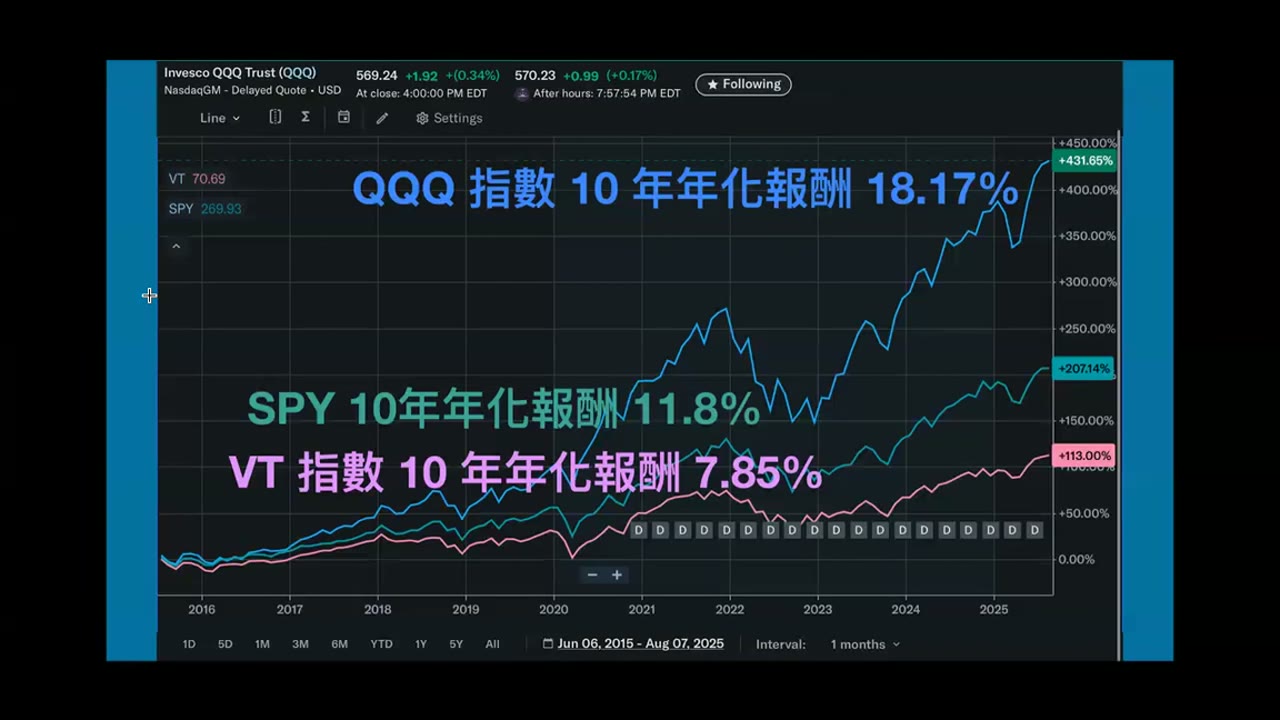
- The video compares QQQ with broader indexes. Its views on relative returns and wealth gaps are statements by the speaker, not recommendations from this site.
- Asked about investing mortgage proceeds, the speaker says retirement status, income, and total assets differ, so another person's allocation should not be copied.
- Holding periods, entry points, and backtests are discussed alongside leveraged products. The cited simulations use past data and do not establish future results.
- The retirement example focuses on debt as a share of assets, repayments, and sustainable cash flow. Rates and distributions can change, so current income may not cover future living costs.
- The closing discussion favors sharing, equality, and common financial values between spouses instead of turning every item of income and spending into conflict.
Chapters
About 00:00:00 · Technology shifts and index selection
The speaker emphasizes AI and digital finance and states his preference for QQQ. This is a viewpoint from the video, not a verified universal conclusion.
About 00:35:28 · Technology growth through changing products
The speaker recalls the progression from microwave ovens and computers to phones and AI, using changes in price, size, and use to explain his view of technological progress.
About 01:02:49 · Mortgage investing and personalized allocation
A listener describes switching products and investing mortgage proceeds. The speaker says allocation must be evaluated against the person's retirement status, income, and assets.
About 01:30:10 · Index differences and concentrated wealth
Using wealth concentration as an analogy, the speaker contrasts different indexes and concentrated holdings while noting that individual-stock results can diverge further.
About 01:57:31 · Time, entry points, and backtests
Holding time and entry points are compared across standard and leveraged products. A recurring-investment backtest is cited as historical data.
About 02:24:52 · Retirement borrowing and cash-flow checks
A hypothetical case considers debt as a share of assets, repayments, and living costs. Changing rates and distributions make stable cash flow an important check.
About 03:00:20 · Shared finances and family relationships
The speaker encourages spouses to share resources, develop common financial values, and retain personal room, linking money habits with marriage and children's environment.
Related Topics
technology-driven industrial change, index investment comparisons, personalized asset allocation, mortgage-funded investment risk, leveraged products, limits of historical backtesting, retirement cash flow, shared family finances
This page was prepared with AI from selected portions of the video's audio to help readers understand the main topics. It may omit secondary material or contain transcription errors; the original video remains authoritative.