CLEC Investment & WealthCLEC Investment & Wealth
  1. Home
  2. Video
  3. Topics
  4. Jensen Huang's AI Factory Era: A Trillion-Unit Bet | CLEC
Jensen Huang's AI Factory Era: A Trillion-Unit Bet | CLEC
Unable to play this video: Jensen Huang's AI Factory Era: A Trillion-Unit Bet | CLEC

Video information

00007

Jensen Huang's AI Factory Era: A Trillion-Unit Bet | CLEC

The video outlines concerns about AI overinvestment, competition, and revenue quality, then presents the speaker's case for AI factories through compute demand, integrated systems, energy efficiency, and sovereign AI.

Published
Sep 28, 2025
Total duration
11:56
Source
CLEC Investment & Wealth

Categories

  • Topics

Video Overview

This video begins with the gap between market analysts and AI builders in their expectations for future demand. It first groups the skeptical case into three questions: whether capacity is being built too quickly, whether revenue reflects genuine demand, and whether competitors can close the gap. The speaker's response is then presented through compute used in pre-training, post-training, and inference; competition at the level of an integrated data-center system rather than a single chip; and the economics of lifetime operating costs and performance per watt. The final portion turns to sovereign AI and closes with the view that accelerated computing could displace general-purpose computing. These are industry arguments and expectations presented in the video, not the site's assessment of any company or market.

Key Takeaways

  • The video groups market concerns into possible overinvestment, revenue that may not reflect genuine demand, and competitors potentially narrowing the gap.
  • The speaker uses pre-training, post-training, and inference to explain compute demand, arguing that a shift from direct answers to multi-step reasoning increases usage.
  • The competitive focus expands from a single chip to an integrated system, with coordination across the data center and performance per watt presented as sources of commercial value.
  • The final portion introduces sovereign AI, presenting the view that countries may build AI factories around their own languages, cultures, and values.

Chapters

About 00:00:00 · Market concerns and the builder's view

The video contrasts the outlooks of market analysts and AI builders, then identifies capacity, revenue quality, and competition as the main concerns.

About 00:02:03 · Compute demand across three stages

The speaker describes demand from pre-training, post-training, and inference, treating multi-step reasoning as an additional source of compute use.

About 00:04:32 · From chips to a complete AI factory

This section widens the competitive frame to CPUs, GPUs, networking, and system software, emphasizing coordination across the data center.

About 00:06:29 · Lifetime costs and energy efficiency

Starting from the ongoing cost of operating an AI factory, the video presents performance per watt and electricity expense as economic factors alongside chip prices.

About 00:08:36 · Sovereign AI and a computing transition

The final portion discusses demand for national AI capabilities and closes with an industry vision of accelerated computing gradually replacing general-purpose computing.

Related Topics

AI factories, compute demand, inference computing, data-center co-design, performance per watt, sovereign AI, accelerated computing, AI infrastructure

This page was prepared with AI from selected portions of the video's audio to help readers understand the main topics. It may omit secondary material or contain transcription errors; the original video remains authoritative.

All Videos

More Videos

Why Non-U.S. Investors Should Consider UCITS ETFs for the Nasdaq-100
00049Jan 1, 2026

Why Non-U.S. Investors Should Consider UCITS ETFs for the Nasdaq-100

Topics

Why Non-U.S. Investors Should Consider UCITS ETFs for the Nasdaq-100

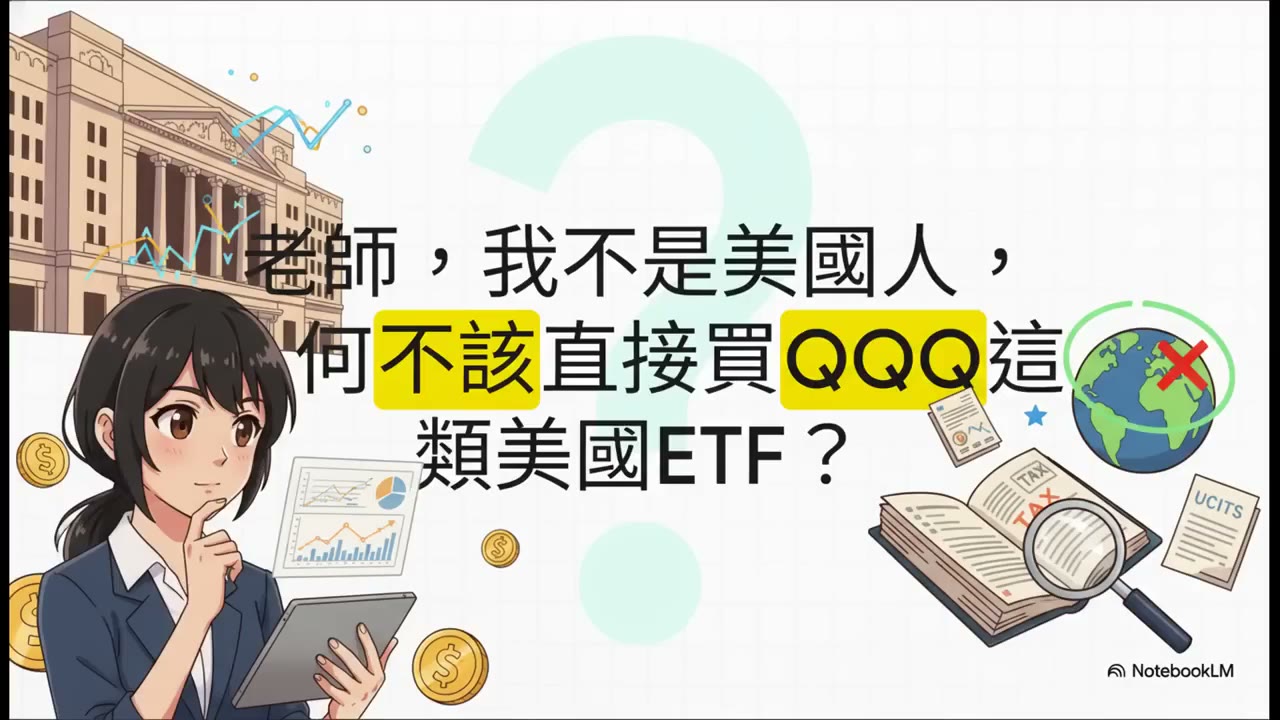
The video discusses U.S. estate-tax considerations for non-U.S. investors holding U.S.-domiciled ETFs, introduces the UCITS structure, compares EQQQ and CNDX, and walks through an international-broker example.

Jan 1, 20269:36
Retirement Withdrawals and QQQ Beyond Tech Stocks: Selling a Home and Going All In on QQQ vs. the Belief That Property Creates Wealth (English Audio)
00048Dec 30, 2025

Retirement Withdrawals and QQQ Beyond Tech Stocks: Selling a Home and Going All In on QQQ vs. the Belief That Property Creates Wealth (English Audio)

Topics

Retirement Withdrawals and QQQ Beyond Tech Stocks: Selling a Home and Going All In on QQQ vs. the Belief That Property Creates Wealth (English Audio)

The video asks whether QQQ should be viewed as a concentrated technology holding, then presents the speaker's views on long-term investing, a 2.5% retirement withdrawal threshold, and property versus liquid investments.

Dec 30, 20257:23
How to Use the Asset-Allocation Backtesting Software
00047Dec 30, 2025

How to Use the Asset-Allocation Backtesting Software

Topics

How to Use the Asset-Allocation Backtesting Software

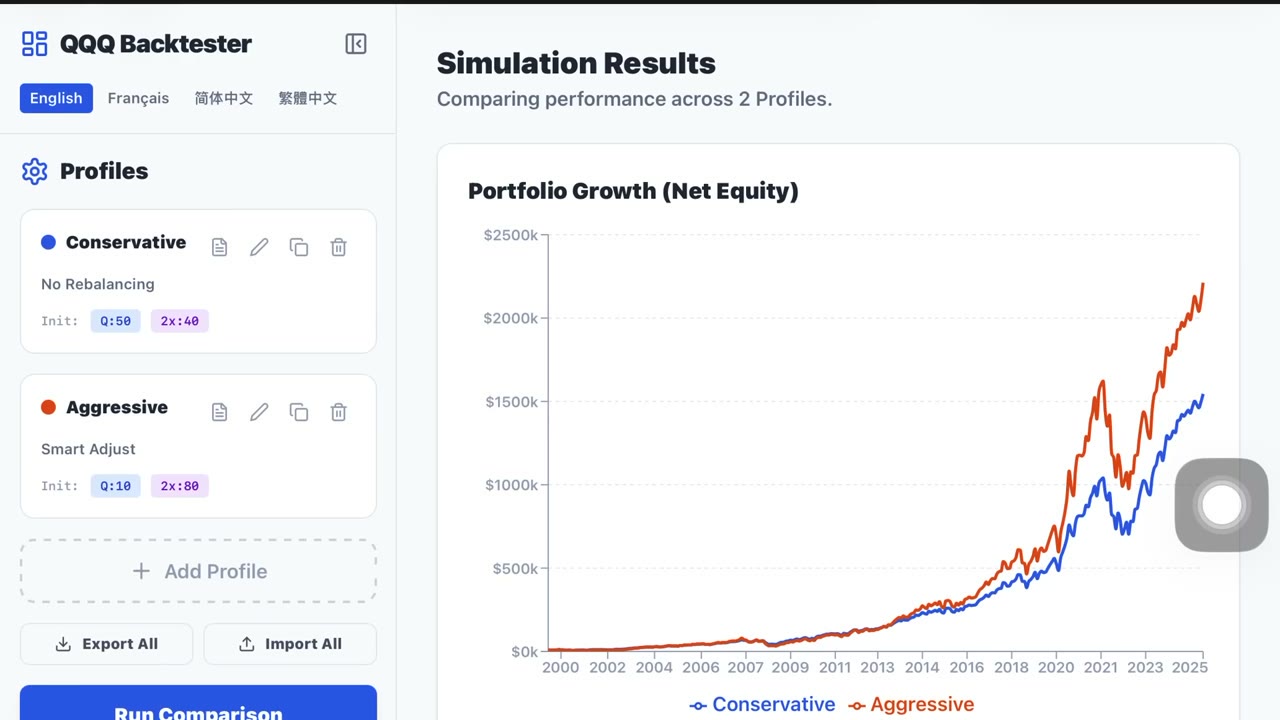
A practical walkthrough of the updated asset allocation backtesting tool, covering portfolio creation and duplication, rebalancing comparisons, result exports, cash-flow views, and household balance sheets.

Dec 30, 202528:56
CLEC Investment & WealthCLEC Investment & Wealth

CLEC content, long-term investing tools, and source materials for learning and independent review.

X (Twitter)Apple Podcasts
Tools
  • Start Here
  • Related
  • Investing Tools
  • Nasdaq-100 DCA Calculator
  • Asset Allocation Simulator
  • Global ETF Comparison
  • Global Nasdaq & S&P ETF Map
  • Mainland China U.S. Index QDII Comparison
  • QQQ returns by year
  • SPY returns by year
Resources
  • Blog
  • Documentation
  • Video
  • The CLEC Handbook
  • Database
About
  • About Us
  • Contact
  • FAQ
  • Waitlist
  • Changelog
  • Roadmap
Legal
  • Cookie Policy
  • Privacy Policy
  • Terms of Service
  • Disclaimer
  • Anti-Fraud Notice
© 2026 CLEC Investment & Wealth. All rights reserved.·Sitemap