CLEC Investment & WealthCLEC Investment & Wealth
  1. Home
  2. Video
  3. Topics
  4. A Personal Finance Bible: Keys to Long-Term Wealth (Educational Content, Not Investment Advice) | CLEC
A Personal Finance Bible: Keys to Long-Term Wealth (Educational Content, Not Investment Advice) | CLEC
Unable to play this video: A Personal Finance Bible: Keys to Long-Term Wealth (Educational Content, Not Investment Advice) | CLEC

Video information

00008

A Personal Finance Bible: Keys to Long-Term Wealth (Educational Content, Not Investment Advice) | CLEC

The video presents a book's perspective on long-term investing, examining inflation and purchasing power, the role of time in compounding, and the case for patience and discipline over market timing.

Published
Sep 30, 2025
Total duration
5:52
Source
CLEC Investment & Wealth

Categories

  • Topics

Video Overview

This video uses the ideas presented in a personal-finance book to examine why knowledge and everyday money habits, not income alone, may shape long-term financial outcomes. It begins with a hypothetical comparison between bank deposits and stock investing to introduce the argument that inflation can erode purchasing power. The discussion then treats wealth building as a long-distance process in which compounding becomes more visible over time. In the final portion, the video presents the book's criticism of frequent trading, attempts to predict market highs and lows, and the pursuit of individual opportunities. It closes by emphasizing patience, discipline, and long-term holding. These are arguments summarized from the video, not investment advice from this site or a promise of returns.

Key Takeaways

  • The video presents the book's view that long-term financial differences depend not only on income but also on knowledge and habits for managing money.
  • A hypothetical comparison is used to argue that the short-term sense of safety associated with deposits may not offset inflation's effect on purchasing power over time.
  • The video uses a wealth accumulation curve to illustrate the role of time, presenting patient holding as more consistent with long-term thinking than rapid trading.
  • The final portion questions market timing and the pursuit of individual opportunities, while presenting discipline as more important than predictive skill.

Chapters

About 00:00:00 · Financial knowledge and everyday habits

The video begins with differences in wealth and presents the book's view that knowledge and habits for managing money are important factors.

About 00:00:42 · The safety of deposits and purchasing power

A hypothetical comparison between deposits and investing introduces the argument that inflation can gradually reduce the purchasing power of savings.

About 00:03:07 · Patience and accumulation over time

The video compares long-term financial planning to a distance race and uses a wealth curve to show how accumulation may become more visible over time.

About 00:04:11 · Discipline instead of market prediction

The final portion presents the book's criticism of market timing and frequent trading, then emphasizes simplicity, long-term holding, and discipline.

Related Topics

long-term investing, financial knowledge, inflation, purchasing power, compounding over time, investment discipline, long-term holding

This page was prepared with AI from selected portions of the video's audio to help readers understand the main topics. It may omit secondary material or contain transcription errors; the original video remains authoritative.

All Videos

More Videos

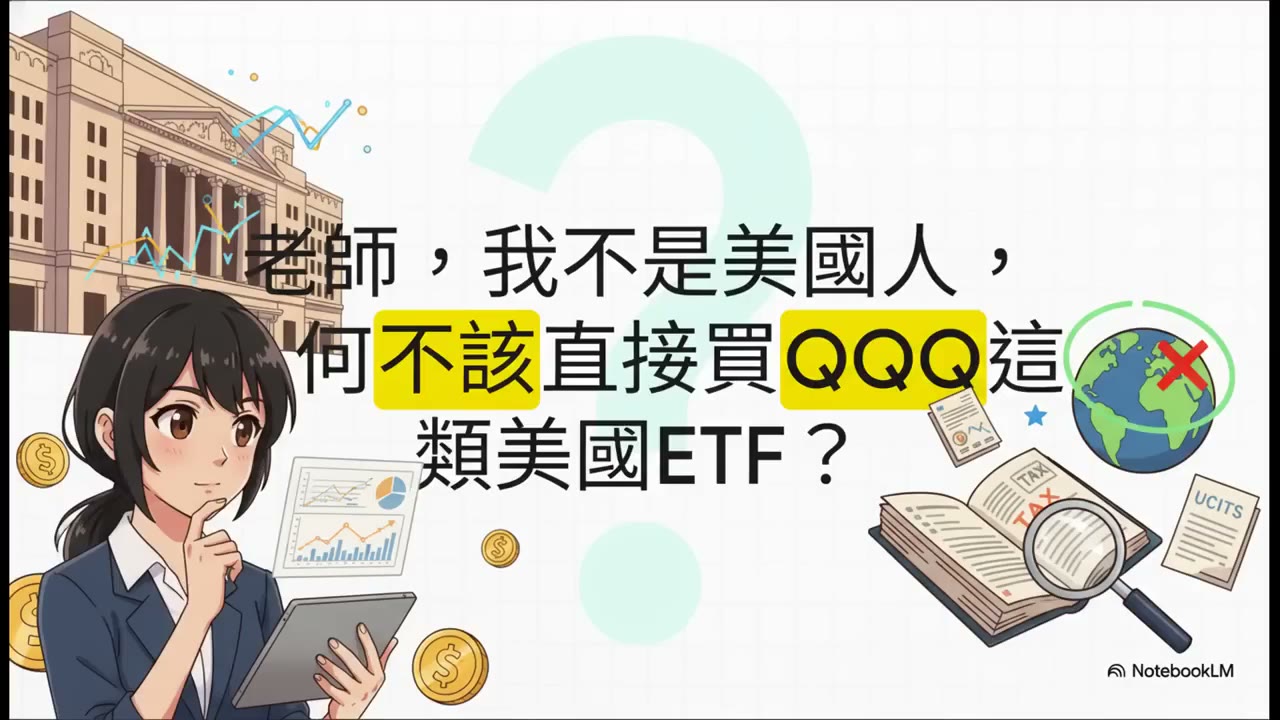
Why Non-U.S. Investors Should Consider UCITS ETFs for the Nasdaq-100
00049Jan 1, 2026

Why Non-U.S. Investors Should Consider UCITS ETFs for the Nasdaq-100

Topics

Why Non-U.S. Investors Should Consider UCITS ETFs for the Nasdaq-100

The video discusses U.S. estate-tax considerations for non-U.S. investors holding U.S.-domiciled ETFs, introduces the UCITS structure, compares EQQQ and CNDX, and walks through an international-broker example.

Jan 1, 20269:36
Retirement Withdrawals and QQQ Beyond Tech Stocks: Selling a Home and Going All In on QQQ vs. the Belief That Property Creates Wealth (English Audio)
00048Dec 30, 2025

Retirement Withdrawals and QQQ Beyond Tech Stocks: Selling a Home and Going All In on QQQ vs. the Belief That Property Creates Wealth (English Audio)

Topics

Retirement Withdrawals and QQQ Beyond Tech Stocks: Selling a Home and Going All In on QQQ vs. the Belief That Property Creates Wealth (English Audio)

The video asks whether QQQ should be viewed as a concentrated technology holding, then presents the speaker's views on long-term investing, a 2.5% retirement withdrawal threshold, and property versus liquid investments.

Dec 30, 20257:23
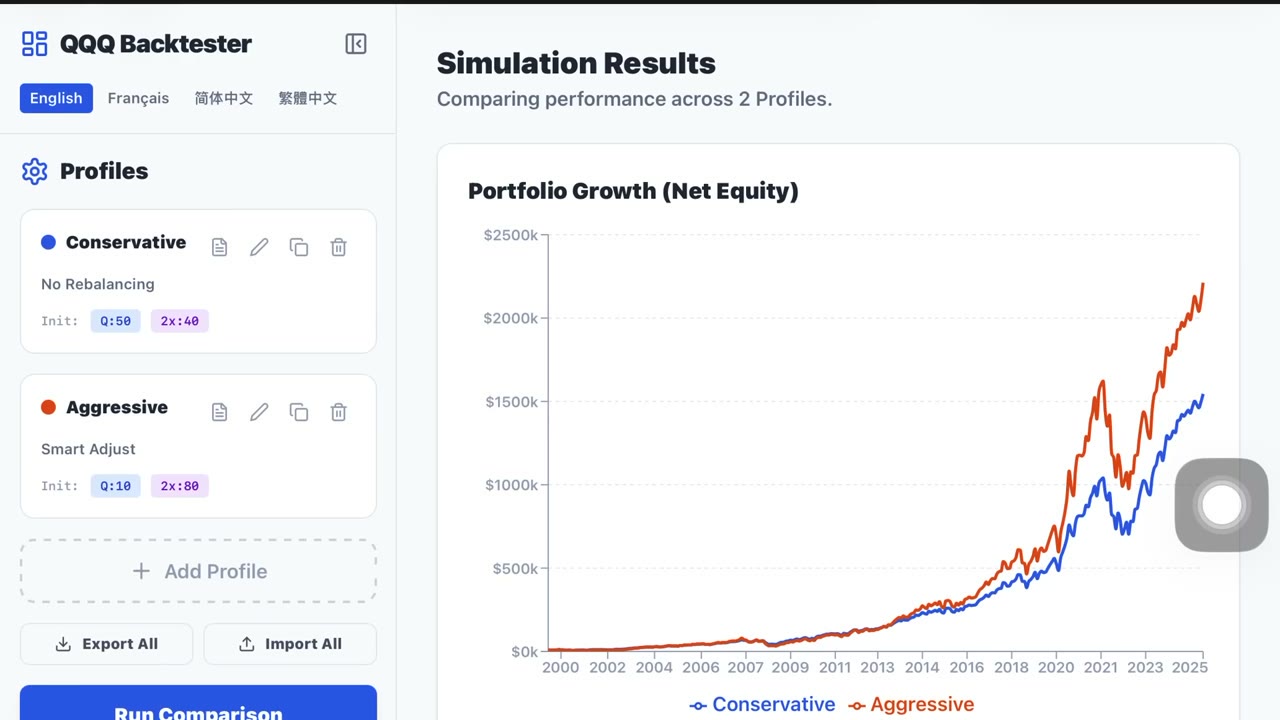
How to Use the Asset-Allocation Backtesting Software
00047Dec 30, 2025

How to Use the Asset-Allocation Backtesting Software

Topics

How to Use the Asset-Allocation Backtesting Software

A practical walkthrough of the updated asset allocation backtesting tool, covering portfolio creation and duplication, rebalancing comparisons, result exports, cash-flow views, and household balance sheets.

Dec 30, 202528:56
CLEC Investment & WealthCLEC Investment & Wealth

CLEC content, long-term investing tools, and source materials for learning and independent review.

X (Twitter)Apple Podcasts
Tools
  • Start Here
  • Related
  • Investing Tools
  • Nasdaq-100 DCA Calculator
  • Asset Allocation Simulator
  • Global ETF Comparison
  • Global Nasdaq & S&P ETF Map
  • Mainland China U.S. Index QDII Comparison
  • QQQ returns by year
  • SPY returns by year
Resources
  • Blog
  • Documentation
  • Video
  • The CLEC Handbook
  • Database
About
  • About Us
  • Contact
  • FAQ
  • Waitlist
  • Changelog
  • Roadmap
Legal
  • Cookie Policy
  • Privacy Policy
  • Terms of Service
  • Disclaimer
  • Anti-Fraud Notice
© 2026 CLEC Investment & Wealth. All rights reserved.·Sitemap