CLEC Investment & WealthCLEC Investment & Wealth
  1. Home
  2. Video
  3. Topics
  4. Sequence-of-Returns Risk: Is a 3% Retirement Withdrawal Risky? QQQ, Cash, Lending, and Rebalancing Explained
Sequence-of-Returns Risk: Is a 3% Retirement Withdrawal Risky? QQQ, Cash, Lending, and Rebalancing Explained
Unable to play this video: Sequence-of-Returns Risk: Is a 3% Retirement Withdrawal Risky? QQQ, Cash, Lending, and Rebalancing Explained

Video information

00012

Sequence-of-Returns Risk: Is a 3% Retirement Withdrawal Risky? QQQ, Cash, Lending, and Rebalancing Explained

The video discusses retirement cash needs, a cash buffer, PAL loan terms, replenishing cash after market gains, and the transition from accumulation to withdrawals.

Published
Oct 13, 2025
Total duration
18:14
Source
CLEC Investment & Wealth

Categories

  • Topics

Video Overview

This video discusses how cash flow can fit into retirement planning when living expenses require steady funding and part of the portfolio remains in volatile assets. The speaker treats ample cash as a buffer during unfavorable markets and proposes beginning retirement with enough cash for at least ten years of living expenses, potentially more than fifteen years, reducing the pressure to sell QQQ at a low point. PAL is described as a backup tool for short-term spending rather than the main source of withdrawals. Its interest, principal repayment, maintenance requirements, and credit limit depend on the financial institution's contract. The video later mentions converting part of market gains into cash and identifies asset categories included in or excluded from this particular framework. It closes by asking how the pre-retirement accumulation of growth assets and cash can connect with post-retirement withdrawal needs. These are views presented in the video, not recommendations from this site.

Key Takeaways

  • The video frames the central retirement challenge as retaining growth assets while funding living expenses with stable cash and managing both withdrawals and market volatility.
  • The speaker proposes holding at least ten years of living expenses in cash at the start of retirement, potentially more than fifteen years, as a buffer against having to sell QQQ at a low point.
  • PAL is presented as a backup for short-term spending; repayment, interest, maintenance requirements, and credit limits must be checked in each financial institution's contract.
  • The closing raises a transition question: how to build the cash needed in retirement while accumulating growth assets such as QQQ before retirement.

Chapters

About 00:00:00 · Growth assets and retirement cash needs

The video opens with the planning challenge of holding growth assets, funding living expenses, arranging withdrawals, and facing market volatility after retirement.

About 00:03:48 · The cash buffer and PAL's role

The speaker proposes cash for at least ten years of living expenses, potentially more than fifteen years, and describes PAL as a backup for short-term spending.

About 00:08:21 · PAL contracts and replenishing cash

The video says PAL repayment and cost terms vary by financial institution and require contract review; it also mentions moving part of market gains into cash.

About 00:12:55 · Asset choices in a specific framework

Within this particular framework, the speaker lists VT, TLT, and several bond asset categories as assets not to include.

About 00:16:43 · Connecting accumulation and withdrawals

The closing restates a specific asset framework and asks how growth assets and cash can be accumulated together before retirement.

Related Topics

retirement withdrawals, living-expense cash flow, cash buffer, PAL borrowing, loan contract terms, portfolio rebalancing, QQQ, retirement transition planning

This page was prepared with AI from selected portions of the video's audio to help readers understand the main topics. It may omit secondary material or contain transcription errors; the original video remains authoritative.

All Videos

More Videos

Why Non-U.S. Investors Should Consider UCITS ETFs for the Nasdaq-100
00049Jan 1, 2026

Why Non-U.S. Investors Should Consider UCITS ETFs for the Nasdaq-100

Topics

Why Non-U.S. Investors Should Consider UCITS ETFs for the Nasdaq-100

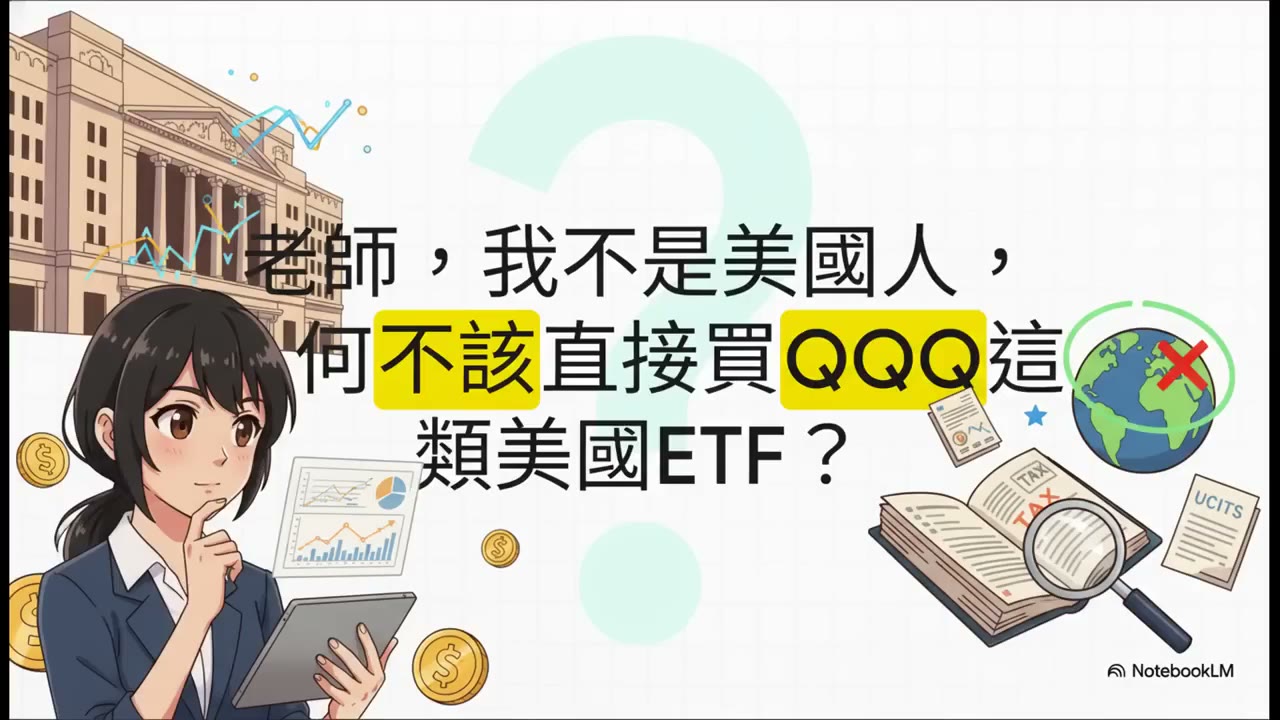
The video discusses U.S. estate-tax considerations for non-U.S. investors holding U.S.-domiciled ETFs, introduces the UCITS structure, compares EQQQ and CNDX, and walks through an international-broker example.

Jan 1, 20269:36
Retirement Withdrawals and QQQ Beyond Tech Stocks: Selling a Home and Going All In on QQQ vs. the Belief That Property Creates Wealth (English Audio)
00048Dec 30, 2025

Retirement Withdrawals and QQQ Beyond Tech Stocks: Selling a Home and Going All In on QQQ vs. the Belief That Property Creates Wealth (English Audio)

Topics

Retirement Withdrawals and QQQ Beyond Tech Stocks: Selling a Home and Going All In on QQQ vs. the Belief That Property Creates Wealth (English Audio)

The video asks whether QQQ should be viewed as a concentrated technology holding, then presents the speaker's views on long-term investing, a 2.5% retirement withdrawal threshold, and property versus liquid investments.

Dec 30, 20257:23
How to Use the Asset-Allocation Backtesting Software
00047Dec 30, 2025

How to Use the Asset-Allocation Backtesting Software

Topics

How to Use the Asset-Allocation Backtesting Software

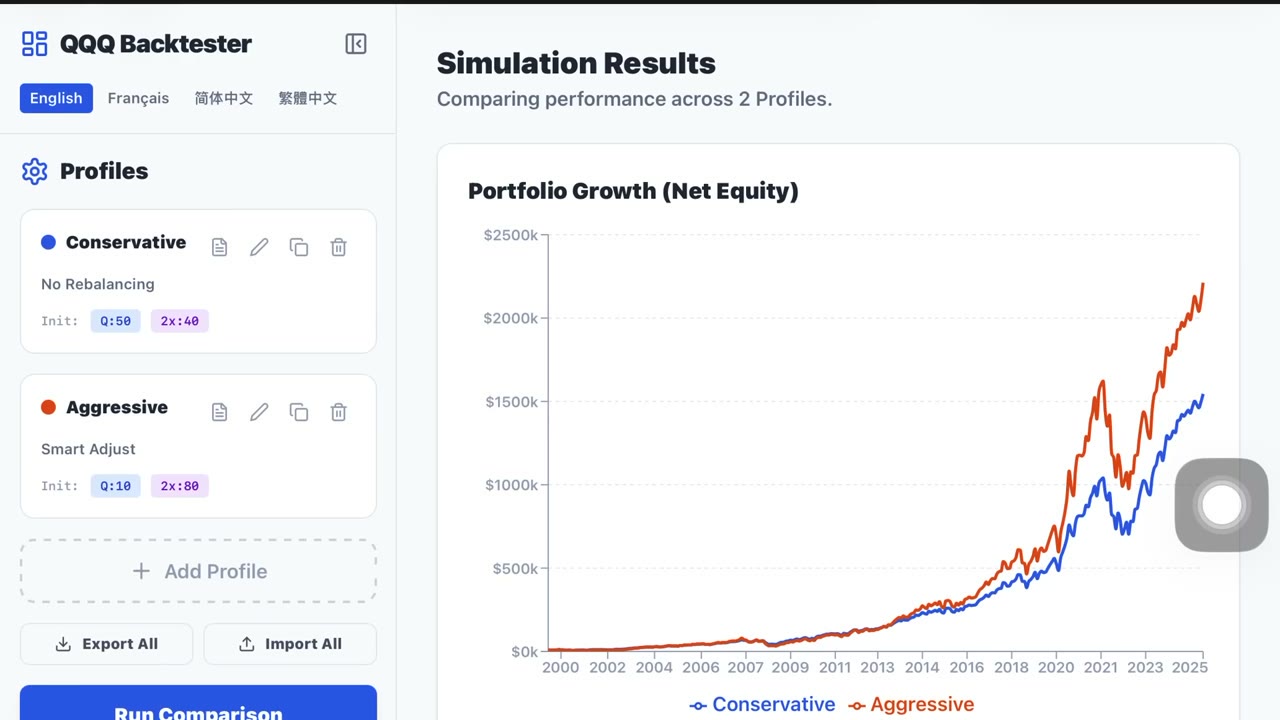
A practical walkthrough of the updated asset allocation backtesting tool, covering portfolio creation and duplication, rebalancing comparisons, result exports, cash-flow views, and household balance sheets.

Dec 30, 202528:56
CLEC Investment & WealthCLEC Investment & Wealth

CLEC content, long-term investing tools, and source materials for learning and independent review.

X (Twitter)Apple Podcasts
Tools
  • Start Here
  • Related
  • Investing Tools
  • Nasdaq-100 DCA Calculator
  • Asset Allocation Simulator
  • Global ETF Comparison
  • Global Nasdaq & S&P ETF Map
  • Mainland China U.S. Index QDII Comparison
  • QQQ returns by year
  • SPY returns by year
Resources
  • Blog
  • Documentation
  • Video
  • The CLEC Handbook
  • Database
About
  • About Us
  • Contact
  • FAQ
  • Waitlist
  • Changelog
  • Roadmap
Legal
  • Cookie Policy
  • Privacy Policy
  • Terms of Service
  • Disclaimer
  • Anti-Fraud Notice
© 2026 CLEC Investment & Wealth. All rights reserved.·Sitemap