Video Overview
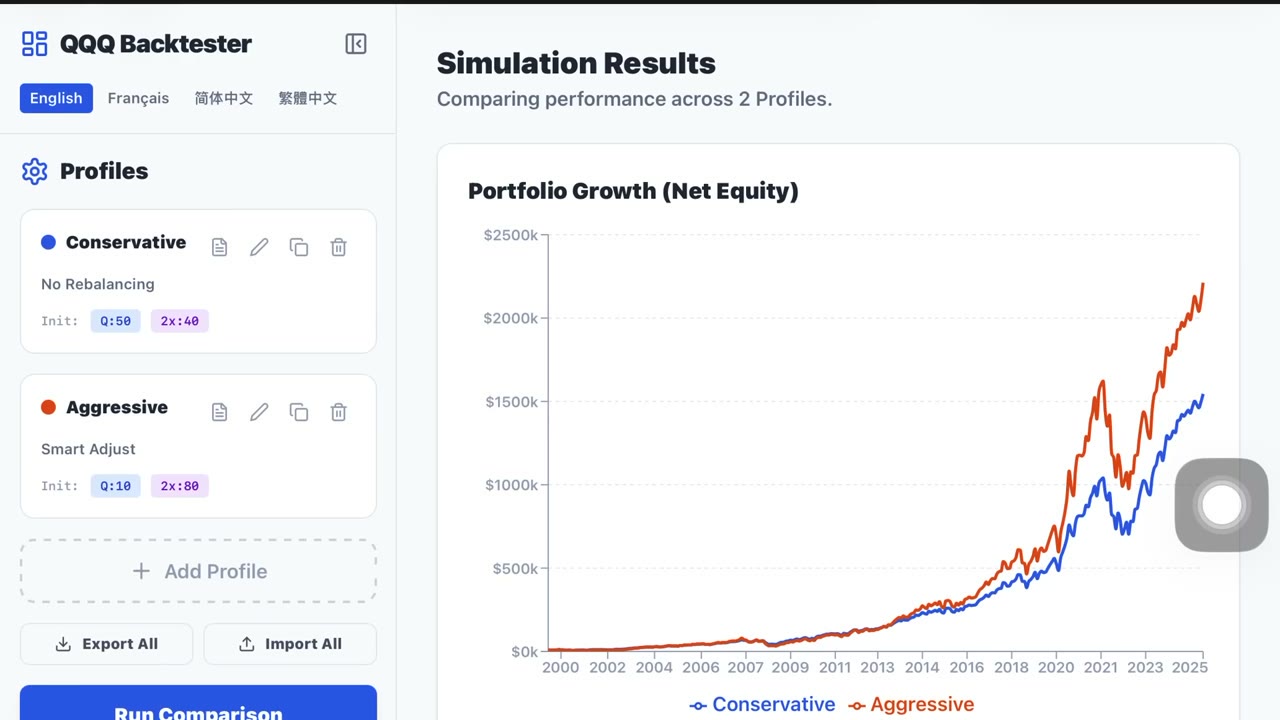
This video walks through an interactive backtesting page built from an existing spreadsheet and a set of rules. The speaker begins with a 433 asset-allocation scenario, then changes the starting capital, lump-sum investment, additional contributions, rebalancing, and securities-backed borrowing to see how each setup behaves in the historical test. The middle of the demonstration uses different borrowing amounts to examine liquidation risk and compares Taiwan and U.S. 433 scenarios. The closing segment returns to the relationship among borrowing, rebalancing, and ending net assets. All figures are inputs or outputs from the model shown in the video, not forecasts. Borrowing against investments and using leverage can amplify risk, and the discussion is not investment advice from this site.
Key Takeaways
- The video introduces a backtesting page built from existing spreadsheet data and rules, allowing users to change inputs and inspect simulated results.
- Using a 433 allocation as the example, the speaker varies lump-sum investment, additional contributions, and rebalancing to compare the scenarios shown in the backtest.
- The securities-backed borrowing test starts with capital of one million and varies the borrowing amount to see whether each scenario survives the test or reaches liquidation.
- The demonstration compares Taiwan and U.S. 433 scenarios and repeatedly corrects borrowing and rebalancing inputs, illustrating how the displayed outcome depends on the assumptions entered.
- The closing comparison looks at ending net assets with different borrowing and rebalancing choices. The speaker observes that more borrowing reduces net assets and that the non-rebalanced scenario performs worse in this particular backtest.
Chapters
About 00:00:00 · Turning a spreadsheet into an interactive backtest
The speaker explains how a student used AI Studio, an existing spreadsheet, and a set of rules to create the web tool, then begins setting up a 433 lump-sum scenario.
About 00:05:59 · Setting lump-sum investment and borrowing
This segment tests a 433 allocation with starting capital of one million, no additional contributions, no rebalancing, and securities-backed borrowing to see whether it passes the simulation.
About 00:12:44 · Increasing borrowing and checking liquidation risk
The speaker adjusts the borrowing amount and cash setting, then uses the backtest display to check whether the higher-borrowing setup triggers liquidation.
About 00:19:28 · Comparing Taiwan and U.S. 433 scenarios
The video places the market scenarios side by side, corrects borrowing and rebalancing settings, and tests the borrowing level that the Taiwan scenario can withstand within the model.
About 00:25:28 · Borrowing, rebalancing, and ending net assets
The final comparison reviews ending net assets across several setups, summarizes the speaker's observations about borrowing and rebalancing, and notes that the tool link will be posted with the video.
Related Topics
asset-allocation backtesting, 433 portfolio, securities-backed borrowing risk, liquidation scenario testing, lump-sum investing, portfolio rebalancing, Taiwan and U.S. market comparison, ending net assets, AI spreadsheet tool
This page was prepared with AI from selected portions of the video's audio to help readers understand the main topics. It may omit secondary material or contain transcription errors; the original video remains authoritative.