
00559
The nature of U.S. dollar hegemony; insufficient pension, how to obtain stable cash flow for retirement
Long
The nature of U.S. dollar hegemony; insufficient pension, how to obtain stable cash flow for retirement
The video discusses sustainable asset allocation, LLMs and identity, cycle-based methods, the context needed for retirement planning, emergency liquidity, and the difference between strategy and short-term action.
1:50:49

00558
[Investment is not an operation, it is a risk control: a comprehensive upgrade of cyclical thinking] Please read the handout if sharing is interrupted in the middle screen
Long
[Investment is not an operation, it is a risk control: a comprehensive upgrade of cyclical thinking] Please read the handout if sharing is interrupted in the middle screen
The video discusses buy-and-hold versus cycle-based methods, consistency during market swings, views on currencies and asset prices, reactions to AI, demand for stablecoins, and a closing health-screening exchange.
1:53:59

00557
Clubhouse [0190] YT (00557) broadcasts a relaxed chat about investment; investment secrets; keys to getting rich; the first step to start investing
Long
Clubhouse [0190] YT (00557) broadcasts a relaxed chat about investment; investment secrets; keys to getting rich; the first step to start investing
This investment Q&A covers earlier course material, industry enthusiasm and capital spending, moving averages, income planning, career choices, and questions about a volatile holding.
3:18:12

00557
The market will drop 80%, can you still hold on? The key is asset allocation
Long
The market will drop 80%, can you still hold on? The key is asset allocation
The video moves from cash levels during instability to business-cycle reading, then uses moving averages, a neckline, and rebound patterns to explain the speaker's view of bearish signals, resistance, and trend changes.
27:27
00556
Why should I not repay the stock loan? The bigger your assets, the more money you have available each year
Long
Why should I not repay the stock loan? The bigger your assets, the more money you have available each year
The video covers long-term allocation, the business rationale for fund splits, learning through sharing, emergency cash, the emotional weight of borrowing, and personal experience with AI automation tools.
3:08:06
00555
From Labor to Capitalist: Boarding the Noah’s Ark of Capitalism
Long
From Labor to Capitalist: Boarding the Noah’s Ark of Capitalism
A wide-ranging Q&A on cash buffers during market declines, an AI-managed hotel stay, retirement allocation questions, continuous glucose monitoring, career purpose, and boundaries in disagreement.
2:20:13
00554
[Born in Capitalism: People in the Maze and People with Navigation
Long
[Born in Capitalism: People in the Maze and People with Navigation
This Q&A covers market noise, capital accumulation, long-term holding, family ties, Canadian housing and retirement saving, QQQI cost basis and distributions, and responding to relatives through consistent action.
2:01:10
00553
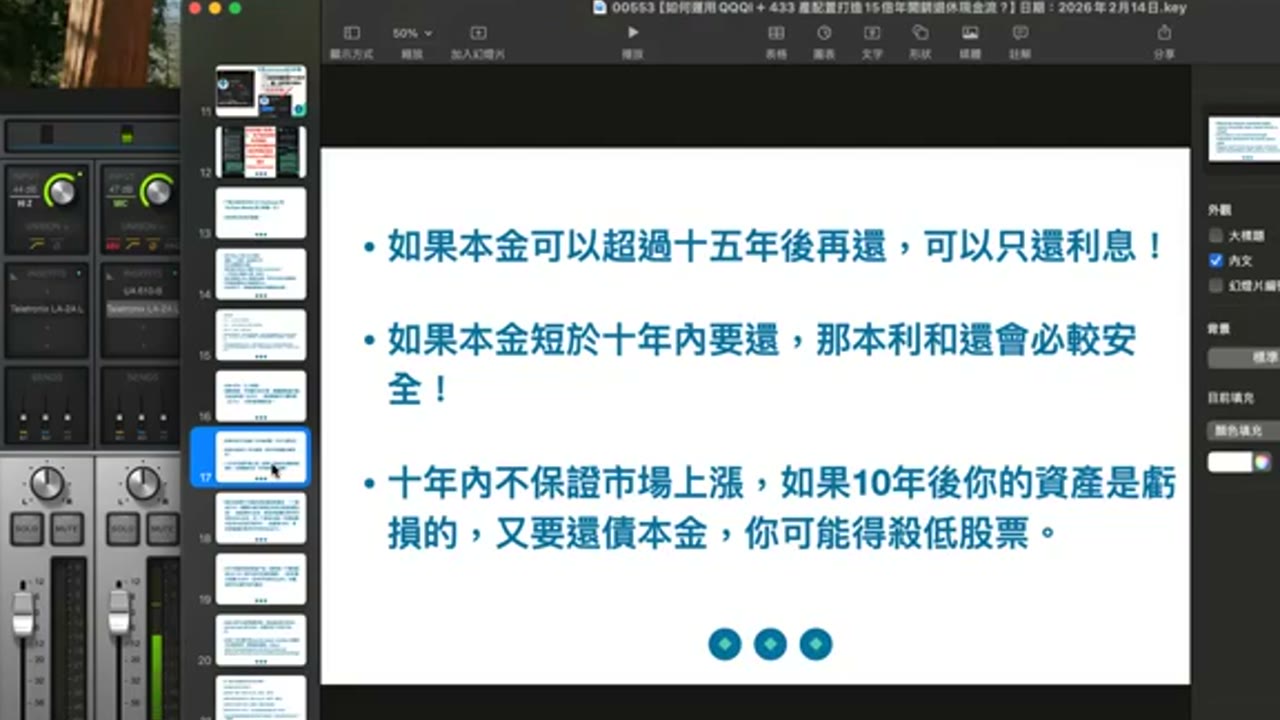
How to use QQQI+433 asset allocation to create a retirement cash flow of 15 times annual expenses?
Long
How to use QQQI+433 asset allocation to create a retirement cash flow of 15 times annual expenses?
A discussion of market swings, life experiences, marriage, finances, an unfinished retirement question, and curiosity and expertise needed to use AI.
2:19:40

00552
The fatal risk you don’t know, without it, investment is fake; taxation, inheritance and misallocation
Long
The fatal risk you don’t know, without it, investment is fake; taxation, inheritance and misallocation
A discussion of protecting funds, avoiding impulsive allocation changes, life priorities, portfolio simulations, account confusion, personal health observations, automated driving, and importing a backtest profile.
2:19:10

00551
Three fatal problems with Pre Tax IRA: RMD, high tax rate, and double taxation
Long
Three fatal problems with Pre Tax IRA: RMD, high tax rate, and double taxation
This Q&A covers a market-independent investing stance, emergency medical spending, Social Security timing, financial independence, work stress, AI, and pledged accounts.
2:26:46

00550
Borrowing to Build Wealth Is Not for Everyone: Temperament Matters More Than Returns
Long
Borrowing to Build Wealth Is Not for Everyone: Temperament Matters More Than Returns
A long-form Q&A about avoiding market forecasts, retirement and borrowed spending, asset allocation and bank cash flow, personal health tracking, cross-region finances, and helping others directly.
2:11:03
00549
Investment is not about choosing a target, but about a system: non-U.S. tax residents should not touch U.S. accounts, do not be superstitious about bargain hunting, and young people should not touch high dividends
Long
Investment is not about choosing a target, but about a system: non-U.S. tax residents should not touch U.S. accounts, do not be superstitious about bargain hunting, and young people should not touch high dividends
A discussion of a no-forecast investing stance, spending freedom, family arrangements, stock-backed borrowing and retirement resets, product access, and FSD ownership tradeoffs.
2:01:07