
00217
How many years and months do I need to work before I can retire?
Short
How many years and months do I need to work before I can retire?
A viewer shares assets, housing, work, and retirement spending needs and asks when retirement is possible. The speaker estimates a timeline under stated assumptions and contrasts accumulation with retirement allocation.
4:56

00216
Unscrupulous insurance brokers are really disgusting
Short
Unscrupulous insurance brokers are really disgusting
A viewer asks if insurance is needed to reserve estate-tax cash for a young heir. The speaker challenges the sales pitch and discusses checking tax procedures, opening a minor's account, and balancing family finances.
3:44

00215
Investment and financial management are necessary means to solve difficulties
Short
Investment and financial management are necessary means to solve difficulties
A viewer encourages older relatives to use investment gains to improve daily life. The speaker discusses using seniors' funds for living, medical, and care costs while easing pressure on family members.
2:17

00214
Can a middle-aged single worker rely on investment to become wealthy and retire?
Short
Can a middle-aged single worker rely on investment to become wealthy and retire?
A Hong Kong writer recounts business setbacks, a gold-investment loss, and repaid debt, then asks whether financial freedom is still possible. The speaker discusses work, cash reserves, and long-term investing.
2:15

00213
How to buy when the market is so high? Are Nasdaq 100 Index Funds Safe?
Short
How to buy when the market is so high? Are Nasdaq 100 Index Funds Safe?
A letter using U.S. retirement accounts and tax rules asks about sale proceeds, a Nasdaq-heavy account, Roth conversions, and estate tax. The speaker answers each question and refers trust matters to specialists.
4:59

00212
The safest way in life is to be careful and avoid risks everywhere
Short
The safest way in life is to be careful and avoid risks everywhere
A letter uses a fare dispute abroad and a near collision while reversing to ask about risk. The speaker discusses avoiding needless arguments, slowing down, checking surroundings, and reducing preventable errors.
5:01
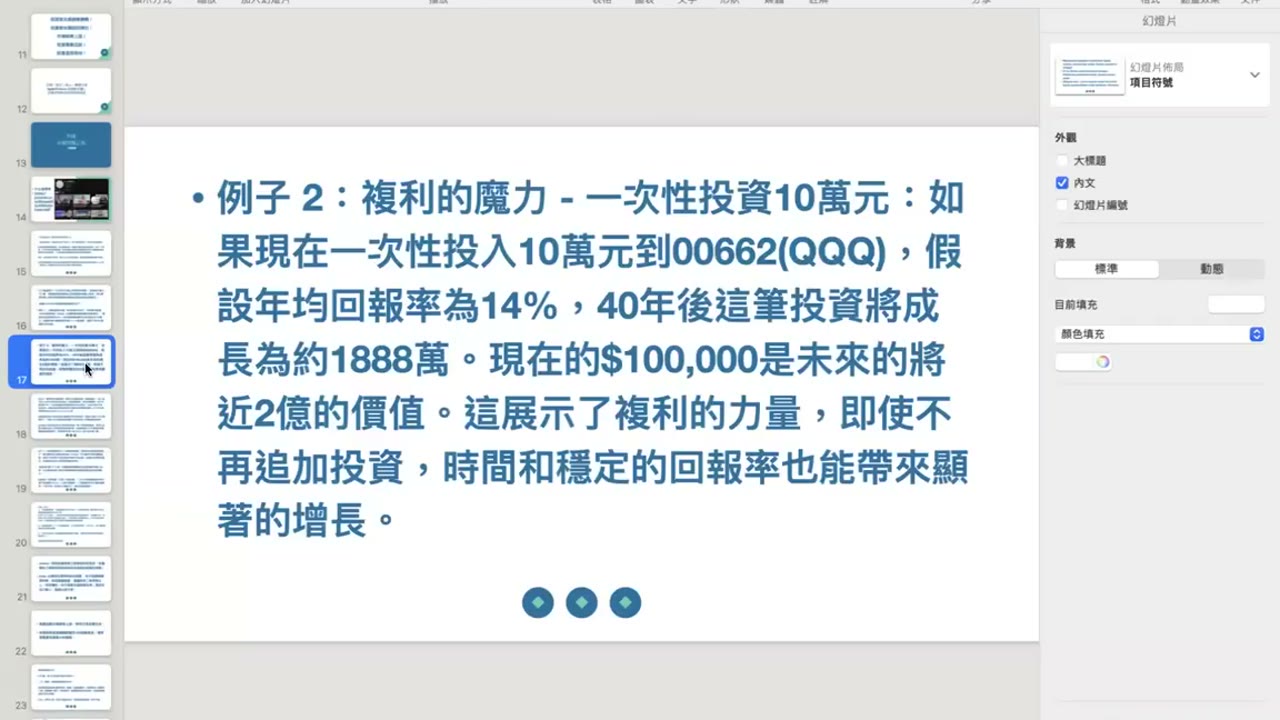
00479
Three examples of how to build wealth easily, start early and use the power of compound interest
Long
Three examples of how to build wealth easily, start early and use the power of compound interest
Selected excerpts cover long-term investing, asset allocation, volatility, return assumptions, timing, and cash reserves. They cover only samples, cannot establish the video's conclusion, and are not investment advice.
2:28:30

00211
In life, you need to know how to spend money and how to spend money to buy happiness.
Short
In life, you need to know how to spend money and how to spend money to buy happiness.
A retired household asks about fund rebalancing and switching costs. Based on their surplus retirement income, the speaker discusses investing, spending on experiences, family sharing, and gradual gifts.
3:26

00210
Stock pledge and asset allocation before and after retirement
Short
Stock pledge and asset allocation before and after retirement
A family retiring in over a decade asks about idle cash, pre- and post-retirement allocations, pledged-asset borrowing, and children's investments. The speaker separates the stages and gives funding-based examples.
3:11

00209
[If you have retired and have no income, you can make a pledge and lend a large sum of money to a safe asset allocation! rev 2 0]
Short
[If you have retired and have no income, you can make a pledge and lend a large sum of money to a safe asset allocation! rev 2 0]
The video stress-tests a retiree with no other income and substantial securities-backed debt, illustrating a larger money-market reserve, lower portfolio exposure, and checks on the borrowing ratio.
4:32

00208
How can people who have pledged stocks and borrowed money make assets? The arrangement of the allocation will not lead to the risk of bankruptcy
Short
How can people who have pledged stocks and borrowed money make assets? The arrangement of the allocation will not lead to the risk of bankruptcy
A retired couple lists liquid assets, property, loans, and annual expenses, asking how to allocate with mortgage and pledged-asset debt. The speaker separates liquid and fixed assets and gives a rebalancing example.
5:44

00207
If you can help people who don’t have any, you can become as rich as we are. This is true wealth.
Short
If you can help people who don’t have any, you can become as rich as we are. This is true wealth.
The video addresses leveraged funds before retirement, allocation changes after retirement, and the speaker's view that genuine wealth includes helping others improve their circumstances.
3:04