00363
There is no problem with long-term investment, the problem is the cognitive error of investment quality; it is safe when the market falls; do not use short-term thinking to make long-term investment
Long
There is no problem with long-term investment, the problem is the cognitive error of investment quality; it is safe when the market falls; do not use short-term thinking to make long-term investment
The video explains why drawdowns break long-term plans and covers broker and ETF custody, wage inflation, offshore accounts, stock-backed loans, cross-border listings, geopolitical anxiety, and short-term thinking.
1:55:06
00360
(Part 2) The four seasons of the investment market; the conclusion of investment success; distinguishing the fun of speculation from investment
Long
(Part 2) The four seasons of the investment market; the conclusion of investment success; distinguishing the fun of speculation from investment
The video covers a stock-backed borrowing model, one trade versus lifelong success, retirement and longevity, unreliable forecasts, QQQ and popular-stock drawdowns, and lump-sum versus staged investing.
1:36:00
00359
(Part 1) The four seasons of the investment market; the conclusion of investment success; distinguishing the fun of speculation from investment
Long
(Part 1) The four seasons of the investment market; the conclusion of investment success; distinguishing the fun of speculation from investment
The video uses “market seasons” to connect rates and liquidity without predicting daily moves, then covers retirement cash flow, offshore assets, margin, stock-backed loans, HELOCs, and leveraged-account stress tests.
48:41
00361
Investment Finance
Long
Investment Finance
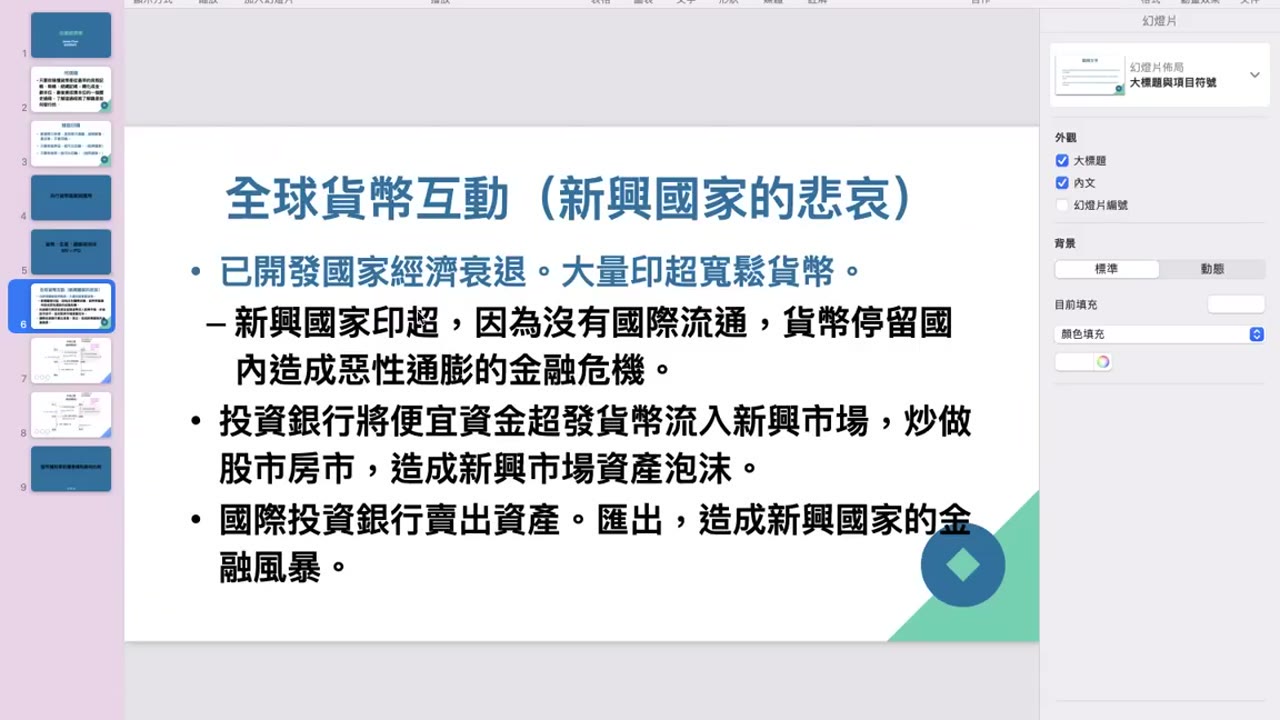
This investment-finance lesson moves from money and central-bank ledgers to policy rates, discounting, sovereign debt, inflation, capital flows, and the risk of mistaking overlaid charts for true correlation.
2:26:45
00358
Think independently when facing the market; only originality is useful; understand the differences between speculation, investment and financial operations
Long
Think independently when facing the market; only originality is useful; understand the differences between speculation, investment and financial operations
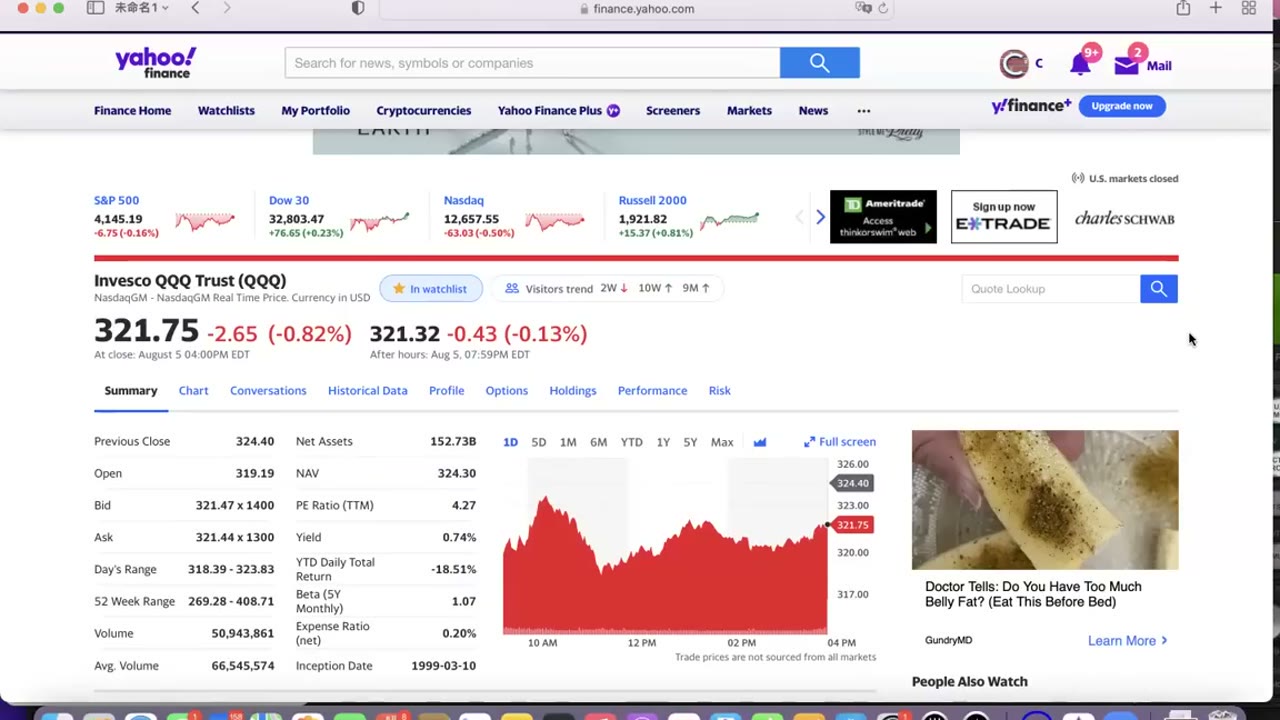
The video examines independent judgment through gold, QQQ, low rates, and capital efficiency; covers stock-backed borrowing and deglobalization; and frames technical analysis as an execution aid, not a precise forecast.
1:39:24
00357
The worst is over; there are still funds to buy three points; how to stop selling; possible signals of the market bottom
Long
The worst is over; there are still funds to buy three points; how to stop selling; possible signals of the market bottom
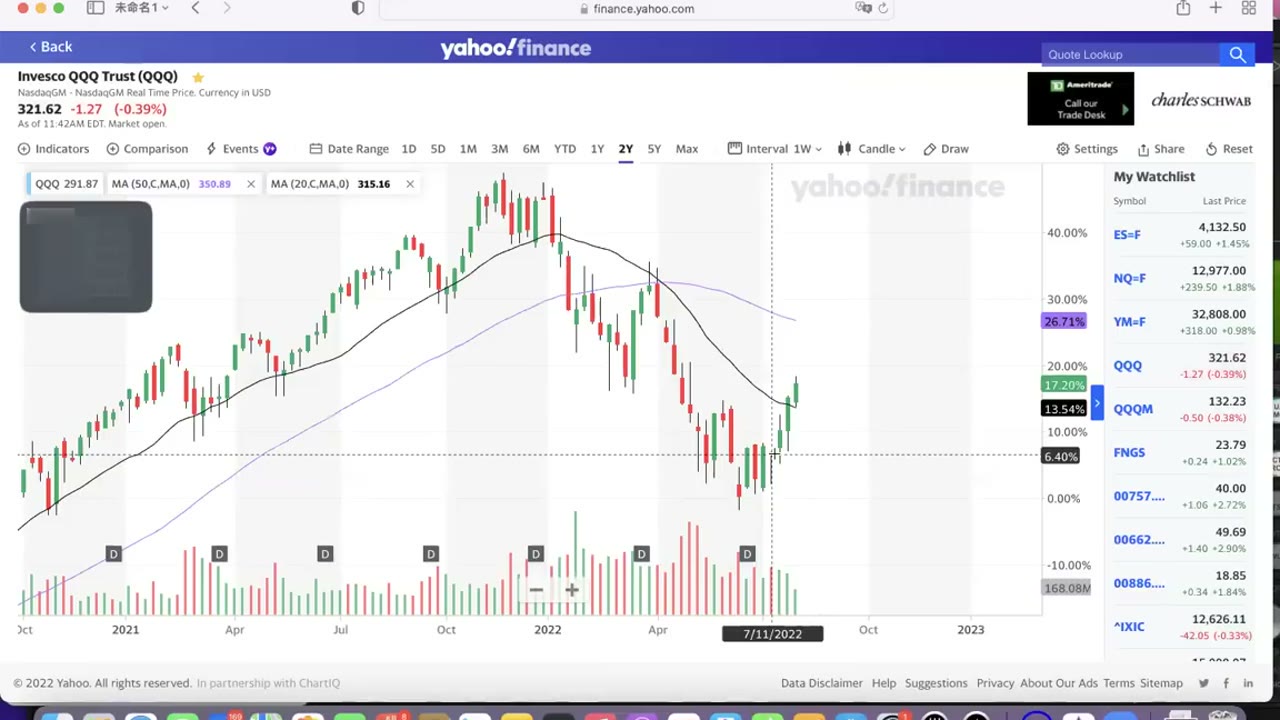
The video examines market-bottom signals, staging capital by time or price, method fit, life goals and decluttering, family priorities, and assumption-dependent QQQ, SPY, and retirement-withdrawal examples.
44:20
00356
Why it is not easy to insist on long-term investment; how to buy on the right side of the transaction; no matter what you buy, just don’t sell. (Some audio is not coherent due to network problems, go to Clubhouse or Podcast to listen to the replay)
Long
Why it is not easy to insist on long-term investment; how to buy on the right side of the transaction; no matter what you buy, just don’t sell. (Some audio is not coherent due to network problems, go to Clubhouse or Podcast to listen to the replay)
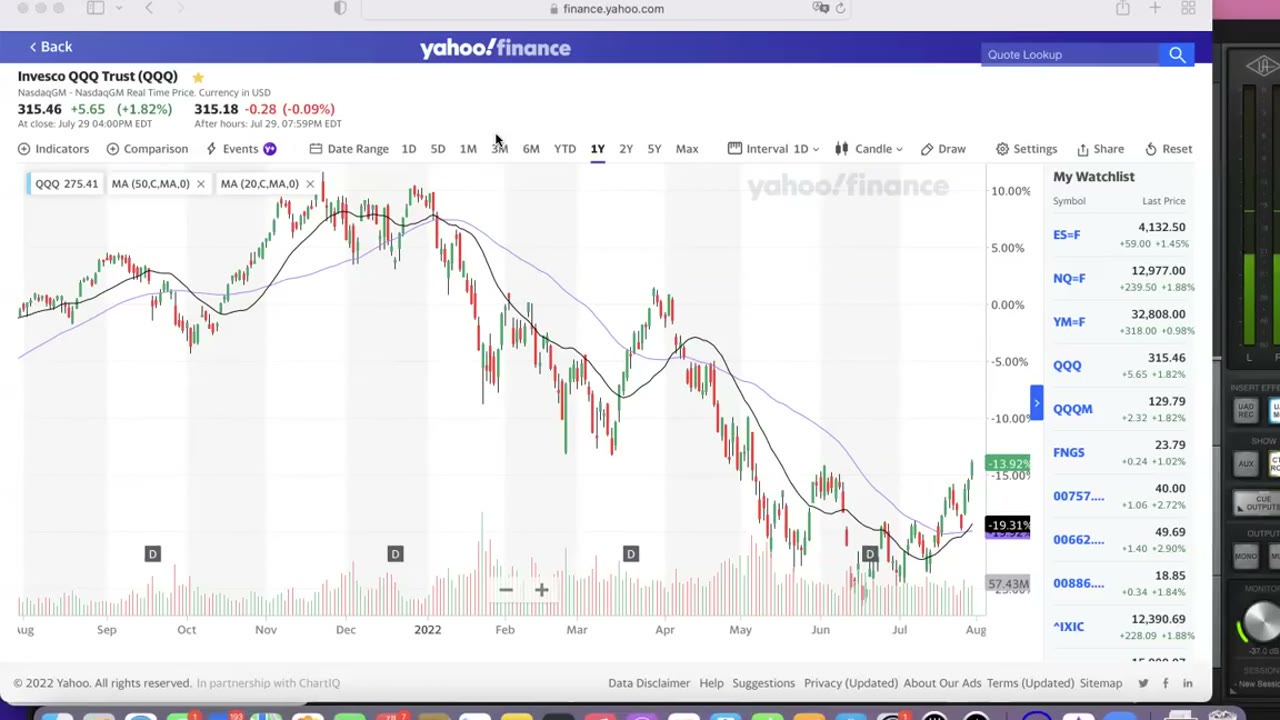
The video explores why long-term investing is hard through Iron Condor and fixed-income risk, index ownership, VGT and QQQ concentration, right-side staging methods, and TQQQ volatility and erosion.
2:07:32
00355
Market bulls are established; Taiwan pledge risks; what you think of long-term investment
Long
Market bulls are established; Taiwan pledge risks; what you think of long-term investment
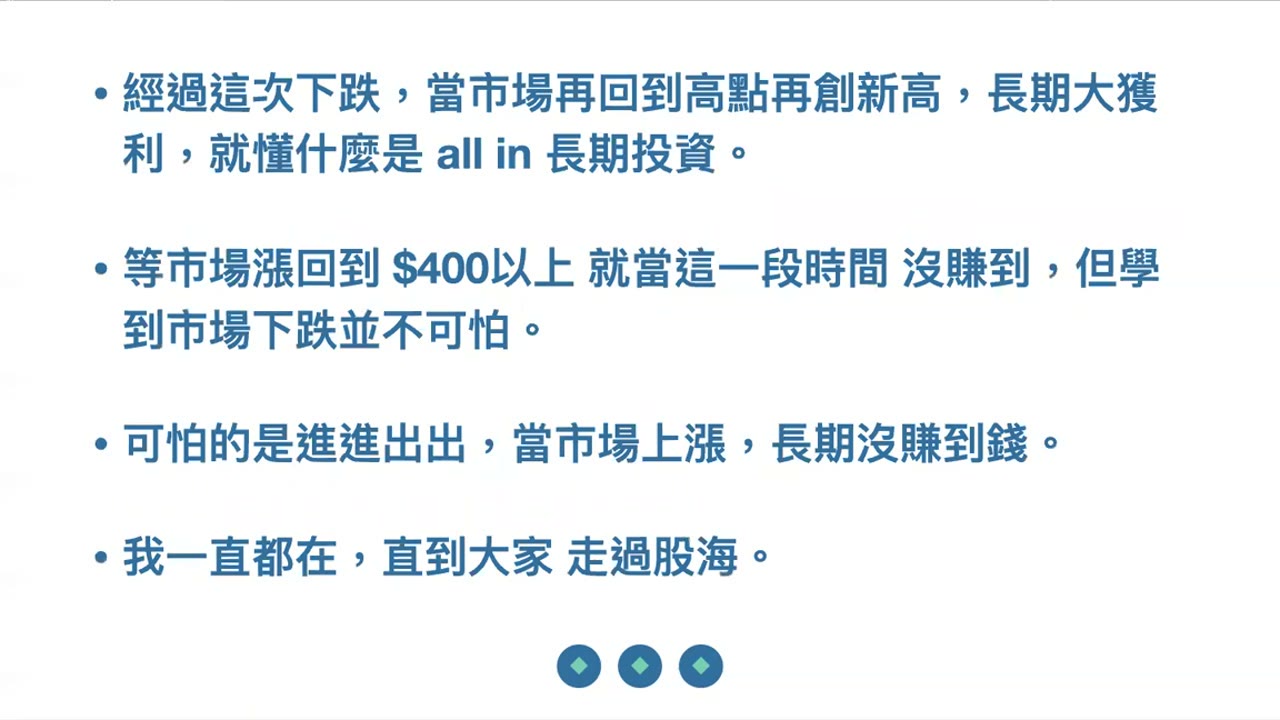
The video covers 20- and 50-day EMAs, liquidity and concentration risks in Taiwanese stock-backed lending, the uneven path of long-term investing, and why hypothetical compounding examples are not retirement forecasts.
27:07
00353
Successful investors: investing requires patience, wealth is worth waiting for
Long
Successful investors: investing requires patience, wealth is worth waiting for
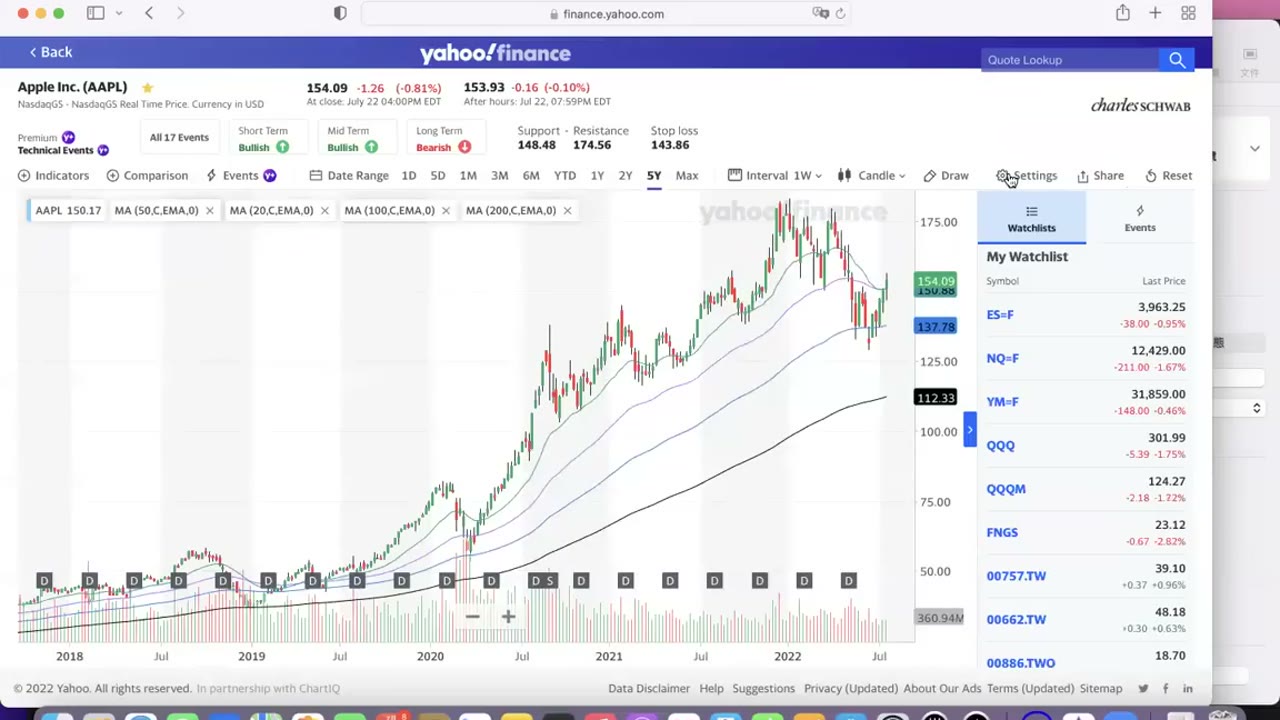
The video covers patience, investment psychology, QQQ valuation, institutional-control claims, companies versus indexes, stock research, staged allocation, moving averages, and staying within one's competence.
2:10:11
00354
Attitude determines the degree of wealth and happiness; at the average buying time, any purchase will do, as long as you don’t sell.
Long
Attitude determines the degree of wealth and happiness; at the average buying time, any purchase will do, as long as you don’t sell.
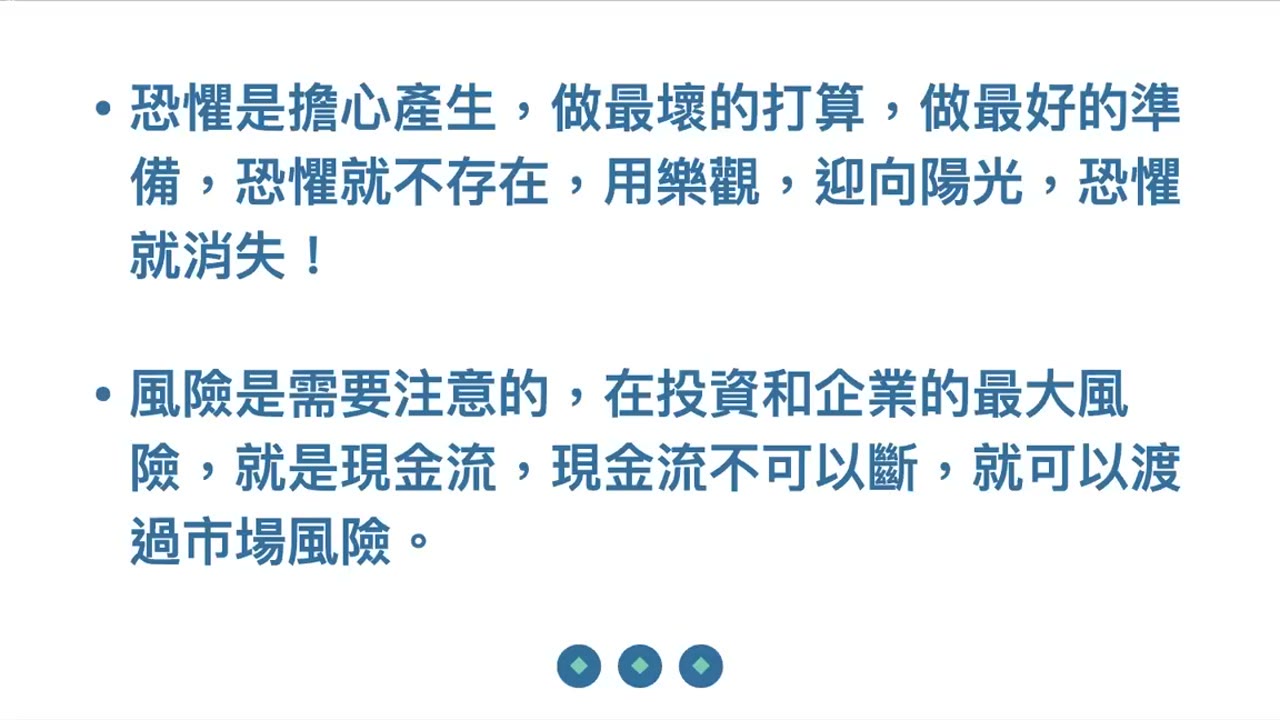
The video covers investment attitude and entry methods, period-specific inflation and rate expectations, moving averages and MACD, national policy differences, and questions about trusts, pledged accounts, and probate.
1:38:13
00352
Investment is a kind of practice and belief; overcoming human nature
Long
Investment is a kind of practice and belief; overcoming human nature
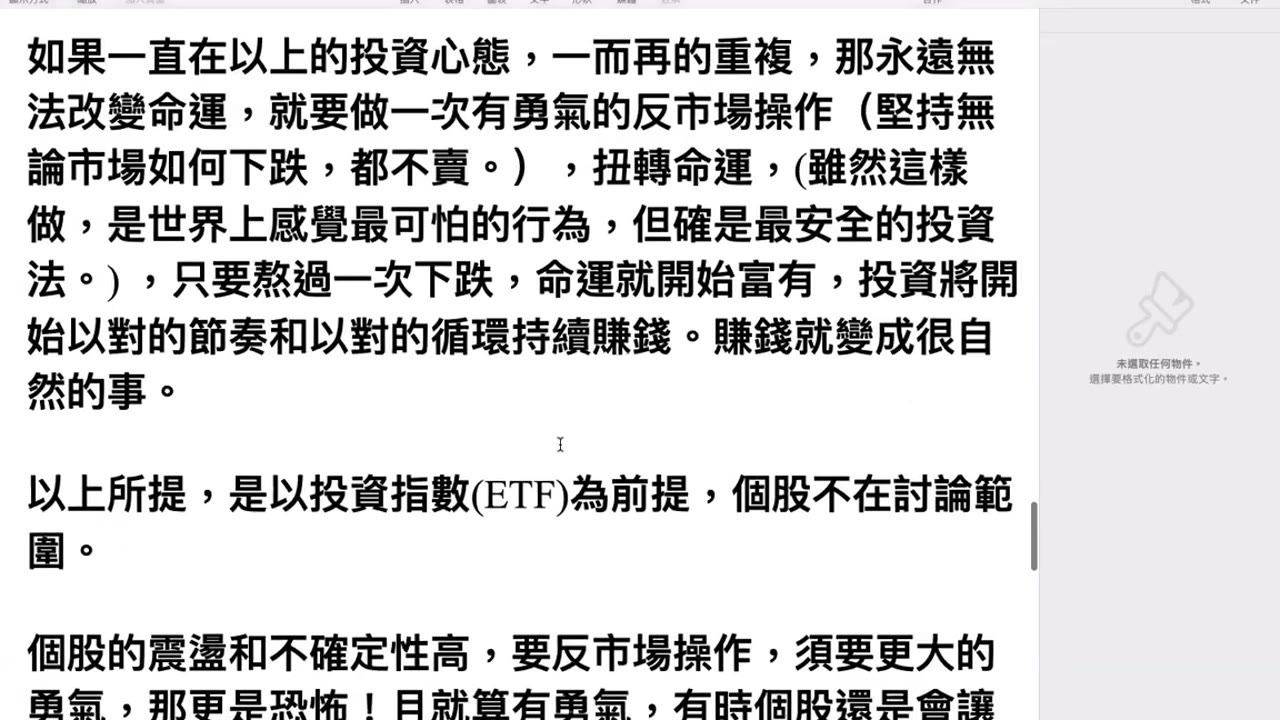
The video examines knowing versus acting in investing, staged allocation, market news and moving averages, Taiwan's stabilization fund, QQQ, SPY, the Dow, 00662, and the personal value of time.
1:59:29

00351
Enlightenment, find oneself
Long
Enlightenment, find oneself
The video reflects on finding the self, existence, inner experience, outside information, family boundaries, body and consciousness, conflicting worldviews, media judgment, and respect for other paths.
1:50:23