
00026
Stocks for the Long Run
Investment Audiobooks
Stocks for the Long Run
Jeremy J. Siegel uses long-run market data to weigh stocks' real returns, risk, inflation, valuation, and diversification; both parts of the audiobook are gathered on one page.
12:23:31
00002
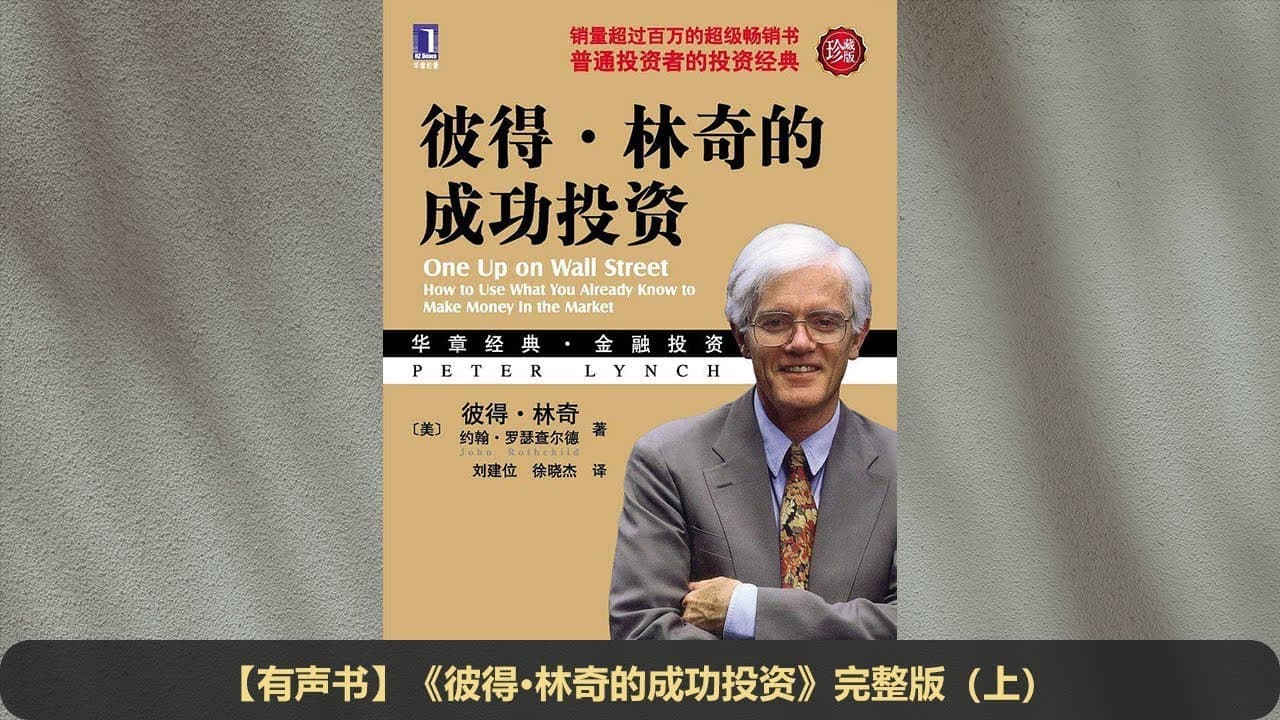
One Up on Wall Street
Investment Audiobooks
One Up on Wall Street
Peter Lynch and John Rothchild show how everyday observation, company classification, financial checks, and long-term tracking turn ordinary clues into real research.
13:34:41

00006
Mastering the Market Cycle
Investment Audiobooks
Mastering the Market Cycle
Howard Marks examines how the economy, credit, corporate profits, and investor psychology interact, and how to gauge roughly where a cycle stands and adjust your risk posture accordingly.
13:15:40

00025
Margin of Safety: A Seven-Part Close Reading (Not a Full Audiobook)
Investment Audiobooks
Margin of Safety: A Seven-Part Close Reading (Not a Full Audiobook)
Seven third-party close readings and commentary on Seth Klarman's Margin of Safety — not an unabridged reading — focused on permanent loss, conservative valuation, catalysts, and portfolio risk.
01:55:43

00028
Get Rich Slowly (《慢慢变富》, no official English edition)
Investment Audiobooks
Get Rich Slowly (《慢慢变富》, no official English edition)
Zhang Juying draws on his own investing practice to discuss choosing companies, the circle of competence, moats, margin of safety, valuation, and long-term discipline; a two-part primary reading and a separate alternate recording are gathered on one page.
11:39:22

00004
Fooled by Randomness
Investment Audiobooks
Fooled by Randomness
Nassim Nicholas Taleb uses trading, probability, and thought experiments to examine luck, survivorship bias, narrative illusion, and the risk of ruin.
06:25:25

00010
Confessions of a Speculator (André Kostolany)
Investment Audiobooks
Confessions of a Speculator (André Kostolany)
André Kostolany reflects on money, psychology, patience, independent judgment, and survival; the merged complete edition, an unlisted older upload, and a short overview clip are gathered on one page.
05:47:02
00042
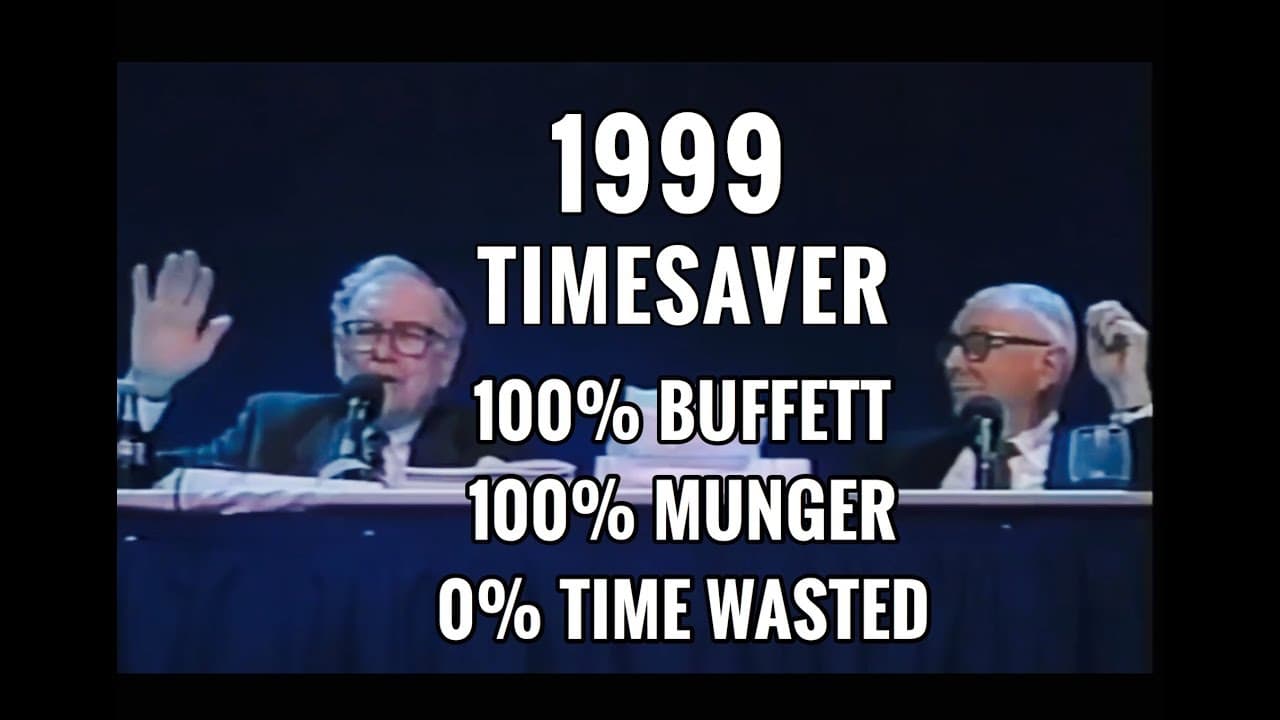
Munger and Buffett — 1999 Berkshire Annual Meeting Q&A (Not an Audiobook)
Investment Audiobooks
Munger and Buffett — 1999 Berkshire Annual Meeting Q&A (Not an Audiobook)
A third-party archival recording of the full 1999 Berkshire Hathaway annual meeting Q&A, in Buffett and Munger's original English, not a book's audio edition; it includes Munger's 'the first $100,000 is the hardest' argument and flags that the viral '$500,000 is enough' line has no primary source.
04:24:48
00572
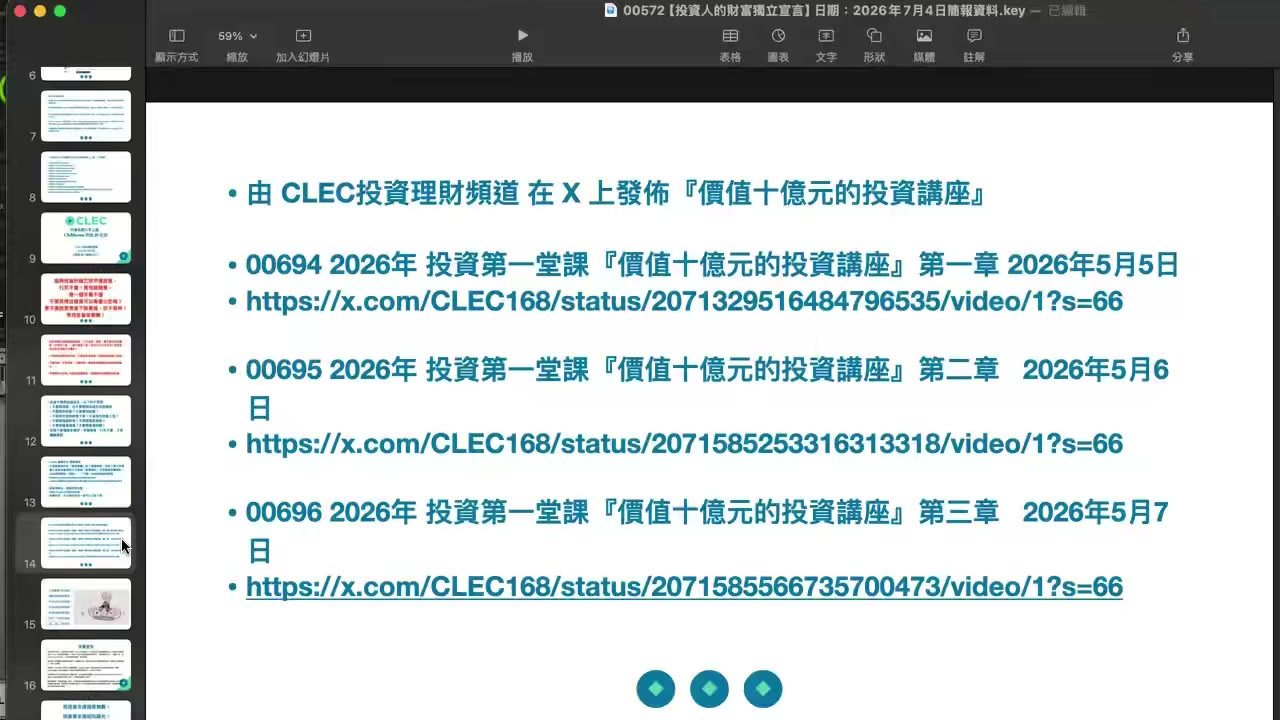
An Investor’s Declaration of Financial Independence
Long
An Investor’s Declaration of Financial Independence
This long-form investment discussion covers access to materials, market emotion, in-depth content, capital and earned income, borrowing to invest, retirement accounts, and a children's account question.
1:48:28
00571
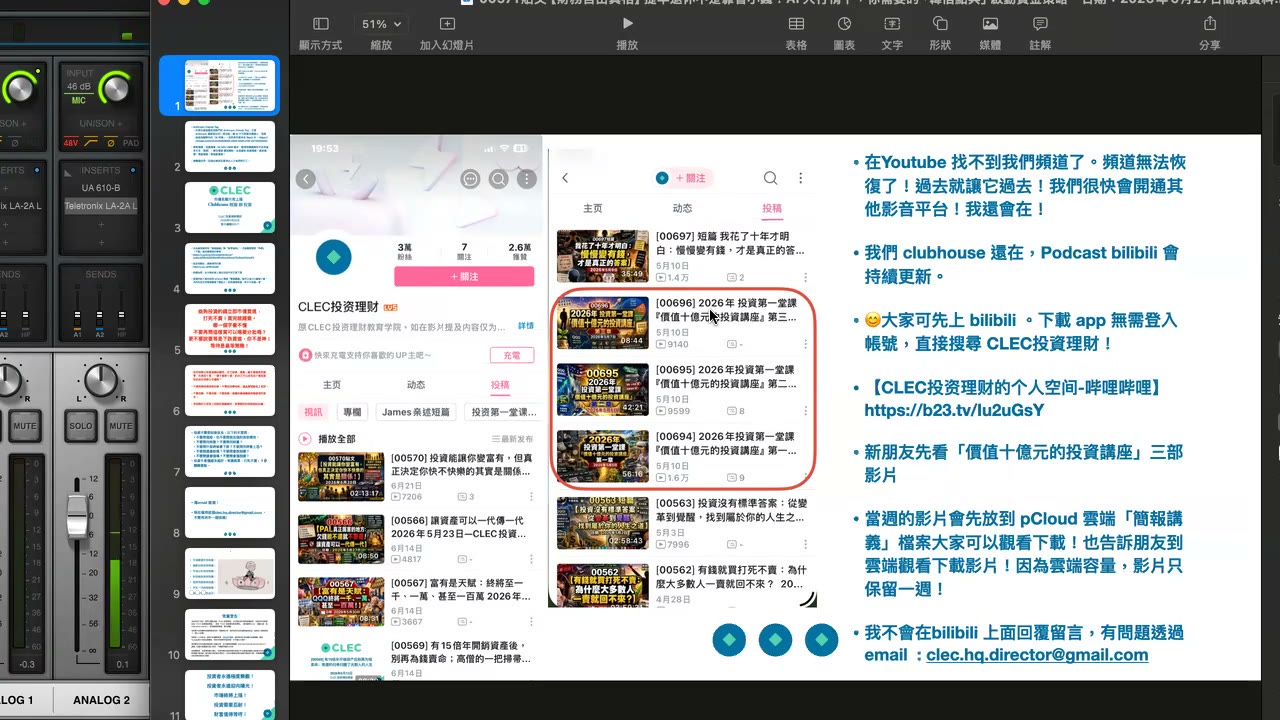
The Truth About Financial Freedom: Early Retirement Is Not About Small Savings—Building Starting Capital for the AI Rally
Long
The Truth About Financial Freedom: Early Retirement Is Not About Small Savings—Building Starting Capital for the AI Rally
This discussion covers a platform move, criticism of financial sales and short-term trading, retirement tradeoffs, family gifts, children's money education, living boundaries, and estate-planning questions.
3:53:26
00570
Investing Can Build Wealth, but Relationships Determine Happiness
Long
Investing Can Build Wealth, but Relationships Determine Happiness
This wide-ranging discussion covers central-bank communication, claims about access to an advanced AI model, relationships, borrowing risk, cross-border money flows, retirement, learning, and cash-flow planning.
2:13:16

00569
Once You Have Assets Equal to 15 Years of Expenses, Stop Working Only for Money—A Tibetan Monk’s Broom as a Wake-Up Call
Long
Once You Have Assets Equal to 15 Years of Expenses, Stop Working Only for Money—A Tibetan Monk’s Broom as a Wake-Up Call
This discussion covers Taiwan's savings, retirement and risk, cross-border holdings, AI shopping and staffing, spending, and quality of life.
3:32:38